Thailand remains the most established and popular retirement destination in South-East Asia, and for good reason. The cost of living is a fraction of what retirees pay in the United States, United Kingdom, Europe, or Australia. The healthcare system in major cities is genuinely world-class. And the infrastructure, climate, and culture make day-to-day life comfortable, affordable, and engaging in ways that are hard to replicate elsewhere.
The retirement visa system is well-tested and renewable indefinitely. The expat communities in cities like Bangkok, Chiang Mai, and Phuket are large, diverse, and welcoming. The food is extraordinary. And the country rewards those who take the time to understand it properly.
What follows is a comprehensive overview of the key areas every prospective retiree should understand before making the move: visas and long-term stay options, cost of living, property ownership, healthcare, and a destination-by-destination guide to the most popular retirement areas in Thailand. All information reflects the rules and conditions as they stand in 2026.
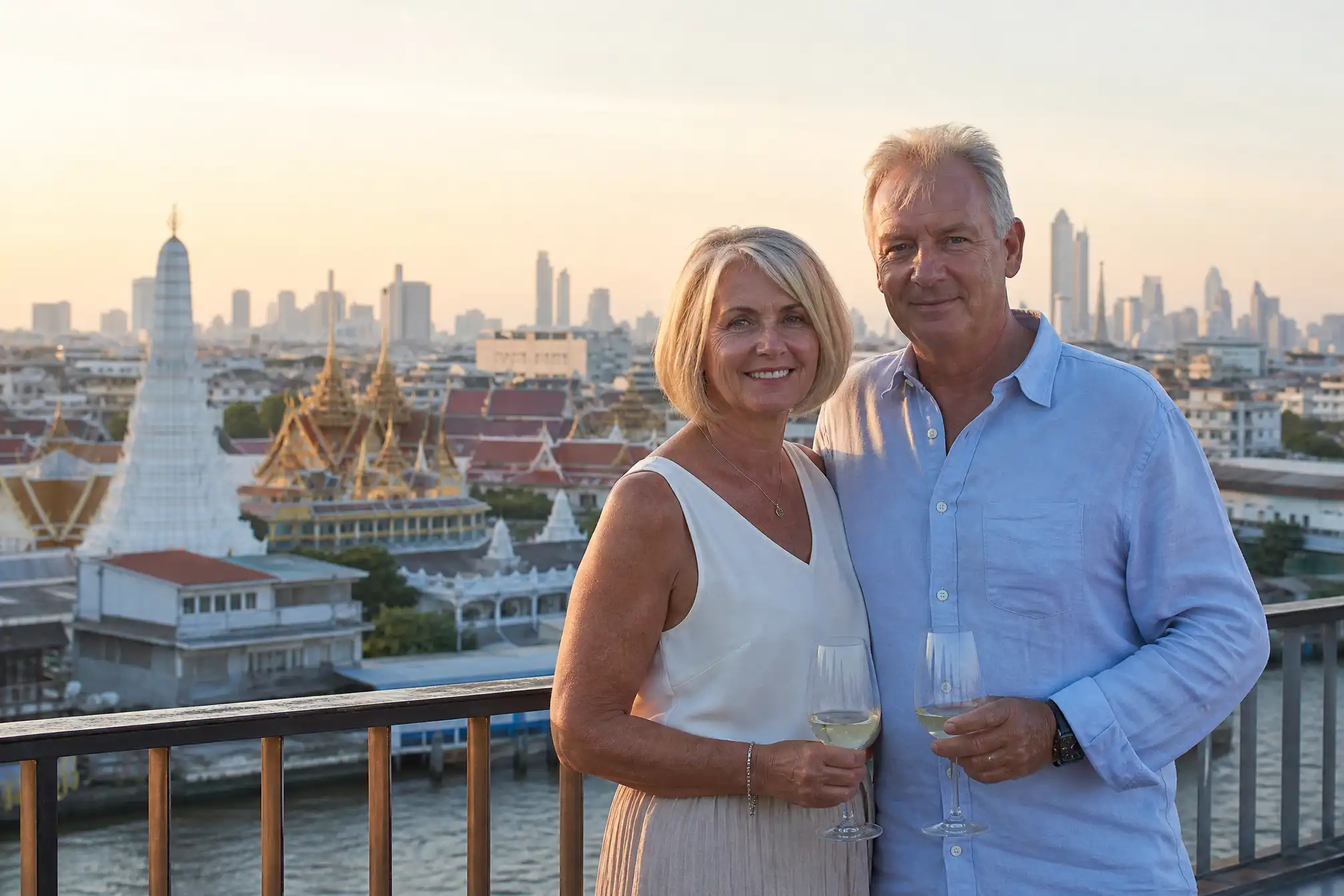
Use this guide as your starting point, then speak with us before committing to visas, property or healthcare arrangements.
Speak with our teamThailand offers more legitimate pathways to long-term residency than almost anywhere else in South-East Asia. The visa system is well-established, clearly documented, and navigable for retirees of most nationalities. The main options are available to citizens of the US, UK, EU member states, Canada, Australia, New Zealand, and most other Western countries.

Thailand has several legitimate retirement visa options. The right one depends on your age, nationality, income, insurance and how much annual paperwork you want.
Ask about visa supportMany Western passport holders enter Thailand visa-free for up to 30 or 60 days depending on their nationality. Americans, Brits, EU citizens, Australians, and Canadians currently receive 60-day visa-exempt entries. This can be extended once by 30 days at a local immigration office. It is a useful starting point for an extended research trip, but it is not a long-term solution.
The standard retirement visa for people aged 50 and over. Issued for one year and renewable annually inside Thailand. Multiple-entry is standard. Available to most nationalities.
For retirees who want minimal annual paperwork. Issued for 5 years and extendable for a further 5 inside Thailand. Available to citizens of 14 qualifying countries including the US, UK, and most of Europe.
Introduced in 2022 and expanded in 2025. Targets retirees with strong passive income or savings. Open to all nationalities. Comes with tax benefits and fast-track immigration processing.
A short-stay non-immigrant visa that can be converted to a retirement extension inside Thailand. Useful if you want to set up your bank account on the ground before committing.
Since October 2019, health insurance has been a legal requirement for the O-A retirement visa. As of 2025, immigration offices are applying stricter checks and some are rejecting foreign-issued policies for annual extensions. Your policy must be from a Thai insurer or a foreign insurer on the Thai Office of Insurance Commission (OIC) approved list.
| Visa | Bank Deposit Option | Income Option |
|---|---|---|
| O-A (1 year) | 800,000 THB held 2+ months | 65,000 THB/month |
| O-X (10 year) | 3,000,000 THB | 1.8M THB + 1.2M THB/year income |
| LTR (10 year) | USD $100,000 deposit | USD $40,000/year passive income |
The Non-Immigrant O-X visa is available to citizens of 14 countries: Japan, Australia, Denmark, Finland, France, Germany, Italy, Netherlands, Norway, Sweden, Switzerland, United Kingdom, and the United States. If your country is not on this list, the O-A (renewed annually) or the LTR (open to all nationalities) are your main pathways.
All long-stay visa holders must notify Thai immigration of their current address every 90 days. This can be done online, by post, or in person at any immigration office. First-timers often find the process easier with guidance.
The cost of living in Thailand is significantly lower than in Western countries, and the gap is wide enough to make a meaningful difference to quality of life on a fixed retirement income. The savings are most dramatic on food, transport, and rent. How much you save depends on where you choose to live and how you choose to live.
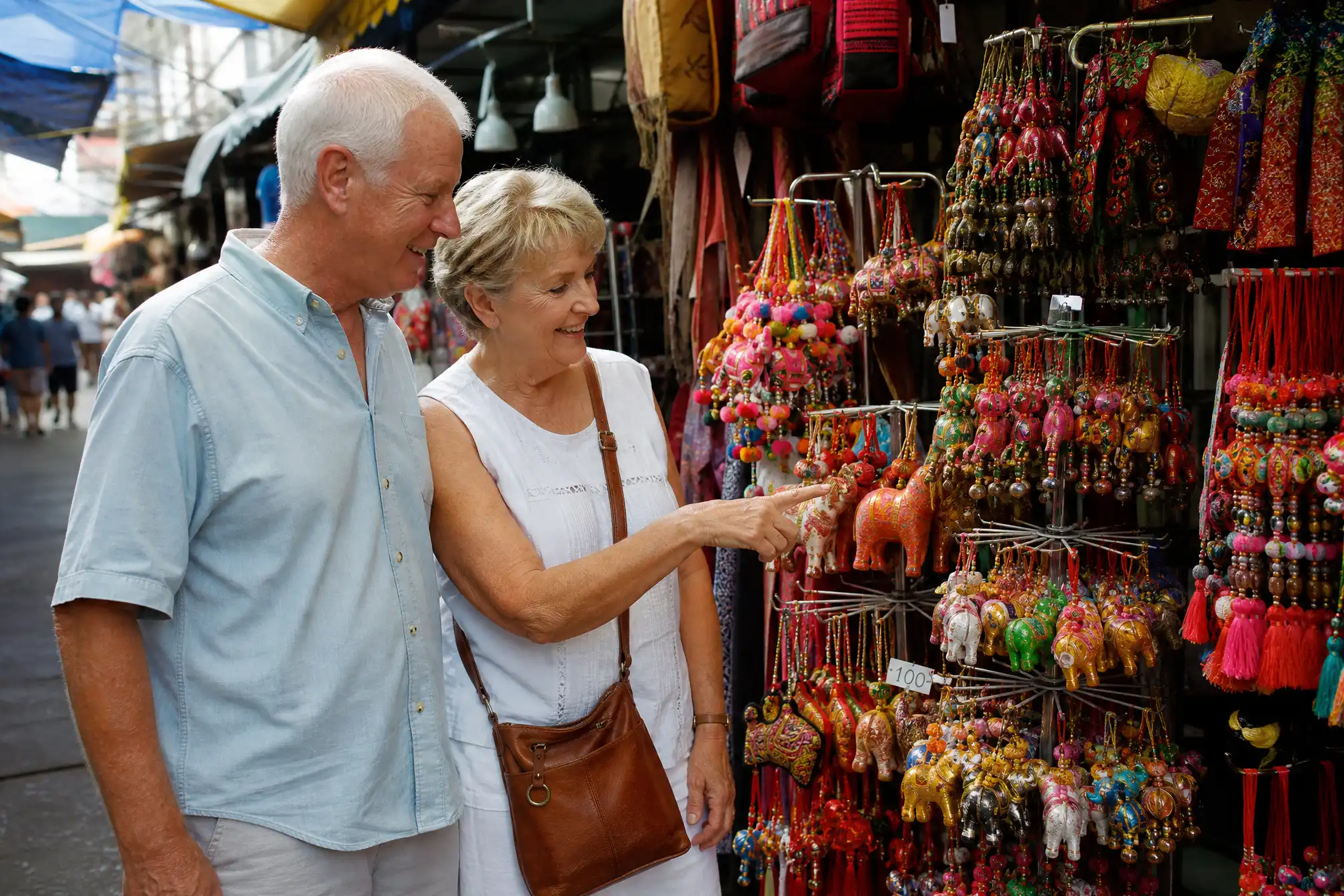
Thailand can be urban, northern, island-based or beach-town practical. The best choice depends on your health needs, budget and daily routine.
Explore your options| Item | vs New York | vs London | vs Sydney |
|---|---|---|---|
| Overall Consumer Prices | -52% | -46% | -47% |
| Meal for 2 (3 Courses, Mid-Range) | -72% | -64% | -66% |
| Groceries (Local Produce) | -51% | -42% | -44% |
| Rent (1BR, City Centre) | -76% | -68% | -71% |
| Local Transport | -72% | -63% | -67% |
| Utilities (Elec/Water/Garbage) | -54% | -47% | -50% |
| Internet (Unlimited Broadband) | -66% | -60% | -64% |
| Private Healthcare (Typical Procedure) | -60% | -55% | -58% |
Sources: Numbeo and LivingCost.org city comparison data (2026). Figures show approximate percentage saving vs each city for a Bangkok lifestyle and are broadly consistent across major cost-of-living indices. Chiang Mai will be 10 to 20% cheaper still; Phuket broadly comparable to Bangkok.
A comfortable retirement lifestyle in Thailand, including a one-bedroom apartment in a good area, dining out regularly at mid-range restaurants, private health insurance, utilities, local transport, and leisure activities, is achievable for most retirees on a monthly budget in the range of USD $1,500 to $2,500 (roughly GBP 1,200 to 2,000 or AUD 2,300 to 3,800). A more modest lifestyle in a city like Chiang Mai can come in below USD $1,200. At the other end, Phuket or Bangkok with a larger apartment and more international dining will push costs higher.
Thai food, local transport, utilities, domestic beer, and fresh produce are dramatically cheaper than in the West. A meal at a local Thai restaurant typically costs USD $2 to $5. Grab (the regional ride-share app) makes getting around cities affordable without a car.
Imported goods, Western supermarket products, European wine, and international cheese are not cheap in Thailand. If your lifestyle depends heavily on familiar Western groceries, budget for that gap. Alcohol taxes in Thailand are high, which makes imported spirits and wine notably expensive compared to local beer and spirits.
Private healthcare in Thailand is affordable today, but medical cost inflation is running at around 14 to 15% per year, well above general consumer inflation. A procedure costing USD $8,000 today will cost roughly double in five years if that rate continues. Factor healthcare cost escalation into your long-term retirement budget and ensure your insurance cover is reviewed annually.
Most retirees fund their Thai lifestyle from income or savings held in USD, GBP, EUR, or AUD. Exchange rates fluctuate. The Thai baht has been broadly stable against major currencies over the past decade, but periodic movements of 10 to 15% are normal over a multi-year period. It is worth keeping a buffer and not converting large sums at unfavourable rates. Most major Thai banks allow foreigners to hold accounts and receive international transfers easily once a retirement visa is in place.
Thailand has some of the most appealing real estate in the region. The ownership rules are different to what most Westerners are used to, and understanding them clearly before you commit is essential.
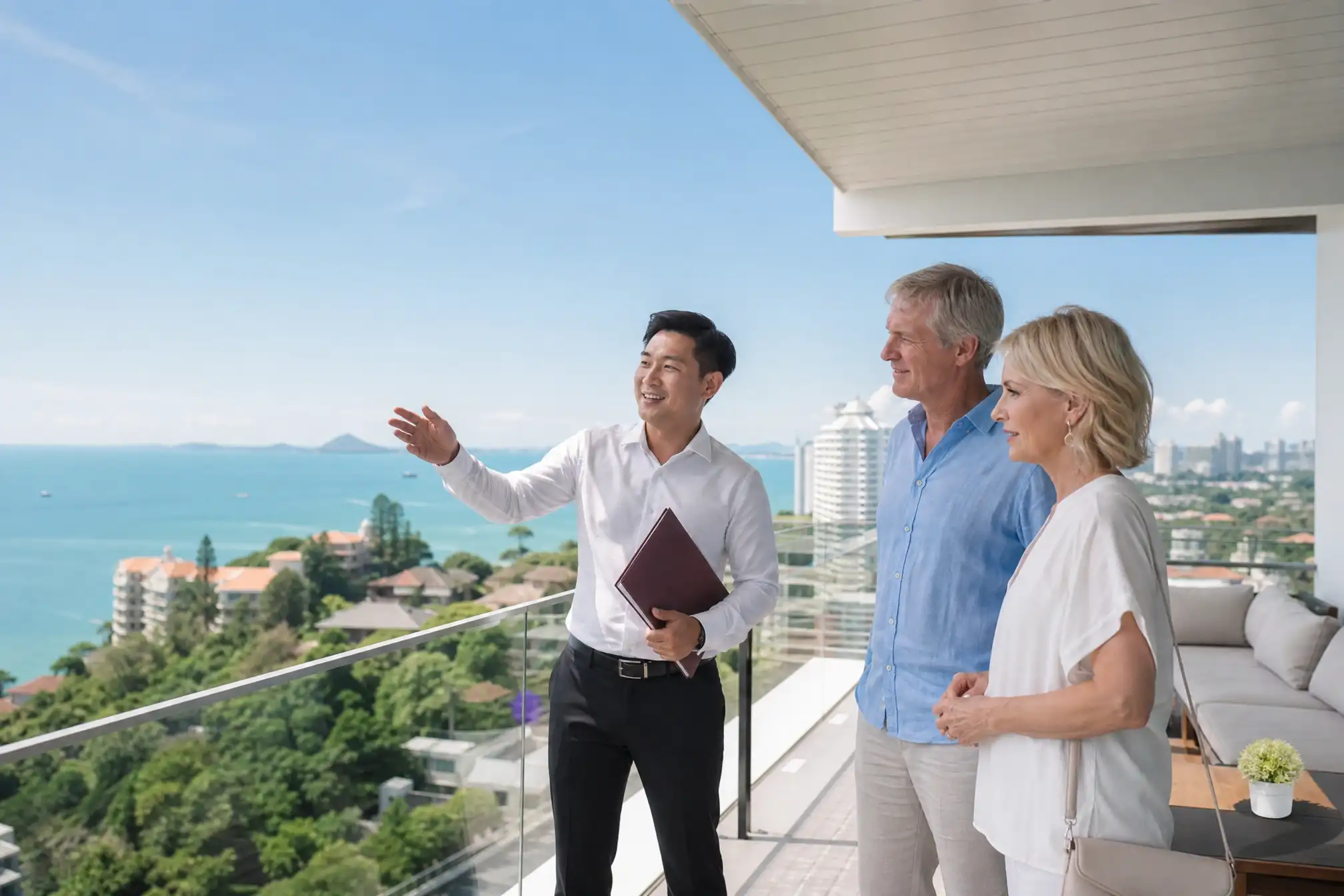
Condos, leases and company structures are treated differently in Thailand. Get proper advice before signing or transferring funds.
Get property guidanceProvided the building's 49% foreign quota has not been filled, you can hold a freehold title deed (Chanote) registered in your name. Purchase funds must be transferred to Thailand in foreign currency from overseas. Your bank issues a Foreign Exchange Transaction (FET) form, which you need at the Land Office to complete the transfer of title. This requirement is strictly enforced and exists to protect the buyer.
Leasehold gives you exclusive rights to occupy and use the property for a fixed term, typically 30 years, registered at the Land Department. A 2025 Thai Supreme Court ruling confirmed that extension options written into a lease are not guaranteed unless structured correctly at the time of signing. Get any lease independently reviewed by a qualified Thai property lawyer before signing.
Structures created solely to hold real estate were subject to intensified enforcement in 2025 and can be classified as nominee arrangements and forced to sell. If this route is ever suggested to you, seek independent legal advice before proceeding.
A significant proportion of condo purchases in Thailand are made off-plan, before the building is complete. New off-plan buyer protections took effect in 2025 under controlled reservation contract rules, which provides stronger safeguards than existed previously. However, due diligence on the developer's track record, financial position, and existing projects remains essential before committing a deposit.
Thailand's private healthcare system is widely regarded as one of the best in Asia and compares favourably with top private hospitals in the United States, United Kingdom, and Europe, at a fraction of the cost. Major private hospitals in Bangkok, Chiang Mai, Phuket, and Pattaya are internationally accredited, English-speaking, and equipped to a standard that meets or exceeds what most retirees are accustomed to at home.
Bangkok Dusit Medical Services (BDMS) operates JCI-accredited hospitals in Bangkok, Phuket, Chiang Mai, Pattaya, Hua Hin, and Koh Samui, providing a consistent standard of private care across all major expat destinations. Bumrungrad International in Bangkok treated over 604,000 patients from 180 countries in 2025, making it one of the most internationally experienced private hospitals in the world. It remains the benchmark for private healthcare in the region and regularly attracts patients from the Middle East, Asia, and the West who travel specifically for treatment.
Willis Towers Watson projects Thailand's medical cost inflation at 14% for 2026, far above general consumer price inflation. Review your health insurance cover annually to ensure it keeps pace with rising treatment costs. A procedure costing 300,000 THB today will cost roughly double in five years at this trajectory.
Most national public health systems, whether NHS, Medicare, or otherwise, provide no coverage outside your home country for long-term residents abroad. Private international health insurance is your primary safety net in Thailand. Arrange cover before you leave, not after you arrive, as pre-existing conditions are easiest to declare and cover from the outset.
Thailand has an outstanding dental sector, with modern clinics in all major cities offering treatment at 30 to 60% below Western prices. Dental work is one of the clearest areas of financial advantage for retirees. Specialist medical care including cardiology, oncology, orthopaedics, and ophthalmology is available to a high standard in Bangkok and Phuket. More remote locations will require travel to a major centre for complex specialist needs.
Understanding a few fundamentals of Thai culture will make your retirement significantly smoother and more enjoyable. Thailand is not a country you can approach as though it were a Western destination with cheaper prices. The culture is distinct, the social rules are real, and those who engage with them honestly tend to have far better experiences than those who do not.
Thai culture places high value on maintaining dignity and avoiding public embarrassment for all parties involved. Raising your voice, expressing anger openly, or aggressively confronting someone over a problem, even when you are clearly in the right, is likely to make your situation worse, not better. Calm, patient, and indirect communication tends to be far more effective. This applies to landlords, government offices, hospital staff, and everyday interactions alike.
Thailand's monarchy is protected under strict lese-majeste laws that carry serious criminal penalties. Comments about the royal family, whether in person, online, or in writing, that could be construed as disrespectful are a genuine legal risk. Similarly, Buddhism pervades daily life in Thailand. Temples are active places of worship, not tourist attractions. Dress modestly when visiting temples, remove shoes when entering sacred spaces, and treat monks with respect. These are not optional courtesies.
English is widely spoken in tourist areas, expat hubs, private hospitals, and international businesses. In daily life, particularly in local markets, government offices, and outside major cities, Thai is the working language. Learning even basic Thai, greetings, numbers, and polite phrases, will improve your daily interactions enormously and is generally met with genuine warmth by Thai people.
Thai society operates with a degree of warmth and social lubrication that many Westerners find genuinely refreshing. If you approach interactions with patience, a smile, and a willingness to accept that things sometimes work differently, you will find Thai people hospitable, helpful, and kind. The retirees who struggle most in Thailand are those who insist on applying Western frameworks to every situation.
Thai food is among the most celebrated cuisines in the world, and eating well in Thailand is one of the genuine pleasures of retiring there. Night markets, street stalls, fresh markets, and restaurant cooking at every price point give retirees extraordinary variety. Regional cuisines vary significantly: the food in Chiang Mai is notably different from Bangkok or the south. Exploring that variety is one of the best parts of settling in.
Thailand attracts large numbers of tourists and expats, and a small industry has grown up around separating newcomers from their money. Common pitfalls include property deals involving nominee structures, overpayment for visa services, and predatory investment schemes marketed specifically at expats. These are almost entirely avoidable with basic due diligence: use licensed professionals for legal and immigration matters, never pay a large sum without independent verification, and treat any investment opportunity with unusual returns as a red flag.
Thailand gives retirees more genuine choice of lifestyle and location than almost any other retirement destination in the world. Mountain city or beach town, urban buzz or island quiet, budget-friendly or full-service: the right answer depends entirely on who you are and how you want to live. Below is an honest, up-to-date guide to the seven destinations we work with most frequently. Click any destination to expand the full guide.
Andaman Coast (Phuket, Krabi): Dry season November to April. Monsoon May to October with heavy rain and rough seas.
Gulf Coast (Koh Samui, Hua Hin, Pattaya): Dry season January to August or September. Brief monsoon October to December. Hua Hin has less rainfall than most Gulf towns due to its geography.
Northern Thailand (Chiang Mai): Cool season November to February is the most pleasant time. Hot and dry March to May. Wet season June to October with moderate rain and the burning season air quality issue peaking February to April.
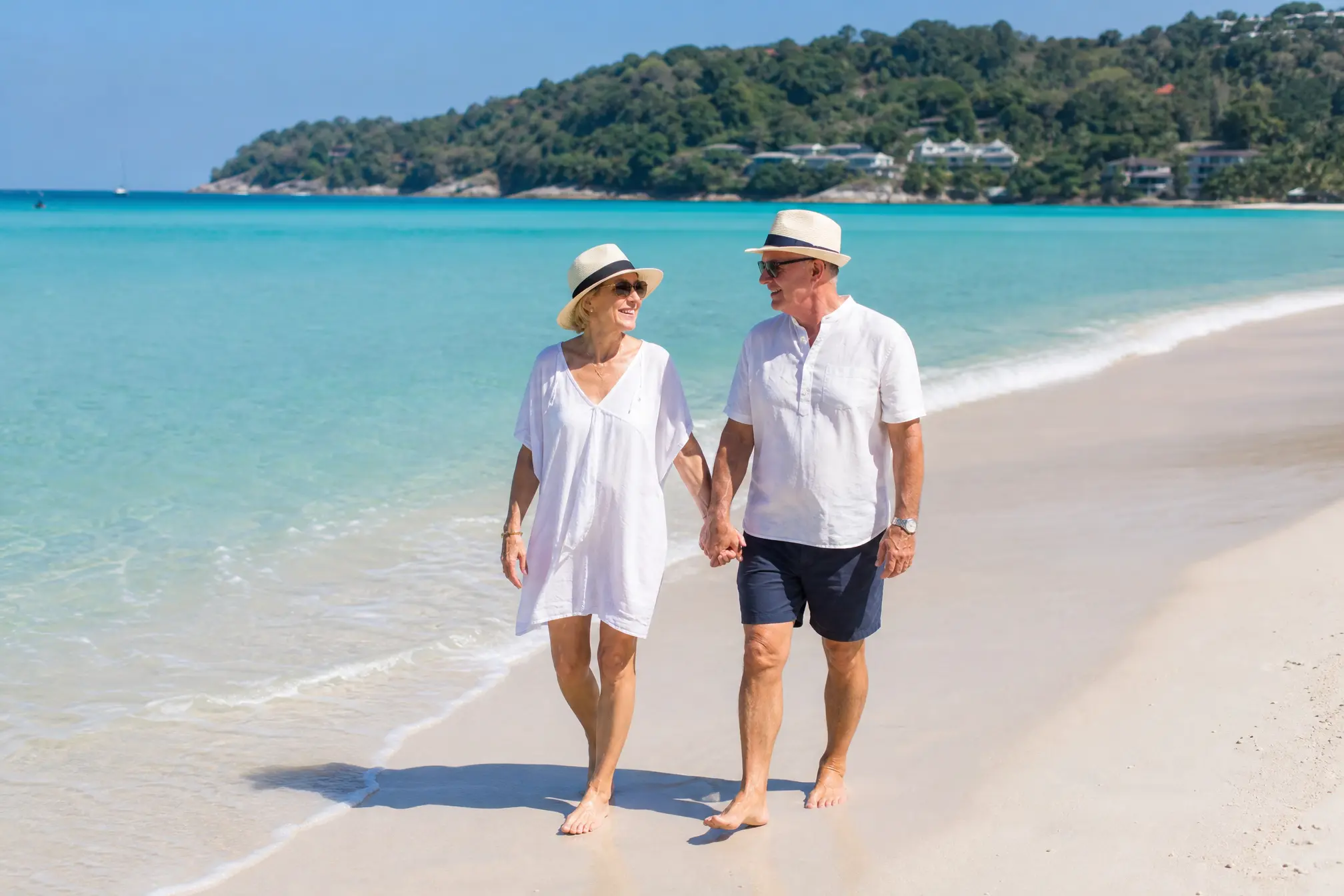
Bangkok, Chiang Mai, Phuket, Hua Hin, Pattaya and the islands all suit different retirees. The right fit depends on your priorities.
Discuss where to liveBangkok is one of the great cities of Asia, and for retirees who want everything within reach, it is hard to beat. The BTS Skytrain and MRT metro make getting around straightforward without a car. World-class private hospitals including Bumrungrad International, ranked 96th in Newsweek's World's Best Hospitals 2026 and treating over 604,000 patients from 180 countries annually, sit alongside top-tier shopping centres, international restaurants, and a cultural calendar that never stops. Bangkok is not a city for everyone, but for the right person it offers a quality of life that genuinely exceeds most Western capitals at a fraction of the cost.
Chiang Mai is consistently rated the top retirement destination in Thailand for one simple reason: it offers the highest quality of life at the lowest cost. Sitting at around 300 metres elevation in Thailand's north, it is several degrees cooler than Bangkok and the beaches, which makes day-to-day life noticeably more comfortable. The city has a thriving expat community, excellent food, a creative arts scene, dozens of temples, and a pace of life that feels genuinely relaxed. Private healthcare is solid, and the cost of living is the lowest of any major Thai expat hub.
Hua Hin is often described as Thailand's retirement capital, and the description is earned. A beach town roughly 3 hours south of Bangkok on the Gulf of Thailand, it combines a genuinely relaxed pace with solid infrastructure, reliable healthcare, and one of the most active expat communities in the country. Unlike Pattaya, Hua Hin has a clean reputation and a largely domestic Thai tourism base, which gives it a noticeably different character. The proximity to Bangkok means emergency access to top-tier hospital care when needed, while day-to-day needs are well met locally.
Phuket is Thailand's largest island and its most internationally connected beach destination. It has a proper international airport with direct flights to Europe, Australia, the UK, and a long list of Asian hubs, a well-developed private hospital network, a strong sailing and water sports community, and an expat population in the tens of thousands. For retirees who want island life without sacrificing access to quality healthcare, international flights, and a full range of services, Phuket is the natural choice. It is the most expensive of Thailand's beach destinations, but the infrastructure justifies the premium.
Koh Samui is a genuinely beautiful island with a distinct character that separates it from Phuket. Smaller, greener, and more intimate, it has its own international airport, a growing private hospital network, and an expat community that tends to be quieter and more settled than the revolving door of Phuket. The Gulf of Thailand setting means a different weather pattern to the Andaman coast, with the main rainy season running October to December rather than May to October. For the right retiree, Koh Samui offers a genuine island paradise lifestyle that rewards those who commit to it properly.
Pattaya divides opinion, but the facts make it hard to ignore as a retirement destination. It is consistently the most affordable of Thailand's established expat beach hubs. It sits roughly 2 hours from Bangkok by road, which means genuine emergency access to the capital's top private hospitals without a flight. It has solid local private healthcare, excellent golf, a massive and diverse expat community, and good road connections. The city's reputation is tied to its Walking Street nightlife district, which is genuinely separate from the residential areas where most long-term expats live.
Krabi is what Phuket was before it was discovered. The province encompasses one of the most visually dramatic coastlines in the world, with limestone karst formations rising from turquoise water, access to world-class dive and snorkel sites, Railay Beach (reachable only by boat), and proximity to Koh Lanta and the Phi Phi islands. Ao Nang, the main expat and tourist town, is growing steadily but remains smaller and more authentic than Phuket's major centres. Costs are lower, the pace is genuinely slower, and the natural environment is extraordinary. The trade-off is less infrastructure, a smaller expat community, and healthcare that requires planning.
Some of these come up in every conversation. Others are less obvious but genuinely matter once you start planning seriously.
No. The O-A retirement visa is renewed annually at any Thai immigration office inside the country. You do not need to border-hop or leave Thailand to extend it. Extensions are usually processed the same day or within a few days at most offices.
Where confusion arises: your visa stamp gives you permission to stay for a year, but you still need to do a 90-day address report every three months (online, by post, or in person). Missing the 90-day report is a separate offence from overstaying your visa. Keep them straight in your calendar and they are both straightforward.
The O-X (5+5 year) and LTR (10 year) visas require even less frequent engagement with immigration offices, which is part of their appeal for retirees who want minimal administrative burden.
Yes, but on a different visa category. A spouse or partner who does not qualify for the retirement visa on their own (usually because they are under 50) can apply for a Non-Immigrant O visa as a dependent of the visa holder. This gives them the same long-term stay rights and is renewable annually.
The dependent O visa requires the primary visa holder to be on a qualifying long-stay visa and typically requires proof of the relationship (marriage certificate or, in some cases, evidence of a de facto partnership). The financial requirements are tied to the primary holder's visa, not separately assessed for the dependent.
Couples where both partners are over 50 can each hold their own retirement visa independently, which some couples prefer for administrative simplicity.
This changed in 2024 and is one of the most important planning points for retirees moving to Thailand. Prior to 2024, foreign income was only taxable in Thailand if it was brought into the country in the same calendar year it was earned. Many retirees structured their finances around this rule.
From 1 January 2024, Thailand amended its rules so that foreign-sourced income remitted to Thailand is assessable regardless of when it was earned. This means pension income, investment returns, and other foreign income transferred to your Thai bank account is potentially subject to Thai personal income tax, which runs from 5% to 35% on a progressive scale.
The practical impact depends heavily on whether your home country has a Double Tax Agreement (DTA) with Thailand, which many Western countries do. The DTA may limit Thailand's right to tax certain income categories. This area genuinely requires advice from a tax professional who understands both Thai tax law and the rules in your home country. Do not rely on what other expats in forums tell you. Get qualified advice specific to your situation.
This is one of the least-asked but most important questions for anyone who owns property or holds significant assets in Thailand. Thai succession law is governed by the Civil and Commercial Code, and it does not automatically follow the instructions in a foreign will.
A Thai will, written in Thai and registered at a District Office, is the most reliable way to ensure your Thai assets pass to the people you intend. Foreign wills can be recognised in Thailand but the process is significantly more complex and time-consuming for your beneficiaries.
Condominium units can be left to a foreign beneficiary, but that beneficiary has a limited window to either sell or transfer the unit (typically one year) unless they independently qualify to hold it. Thai nationals can inherit and hold all asset types.
If you own property in Thailand, have a Thai will drafted by a qualified Thai lawyer. The cost is minimal relative to the peace of mind and the potential complications it prevents.
Essentially yes, with very narrow exceptions that do not apply to most retirees. Foreigners cannot hold freehold title to land in Thailand. The Foreign Business Act and Land Code are clear on this, and enforcement has increased in recent years.
The two routes most commonly discussed are: holding land through a majority Thai-owned company (legal in some commercial contexts, but using it as a vehicle purely to hold residential property is classified as a nominee arrangement and has been prosecuted), and the 30-year leasehold registered at the Land Department (the standard legitimate path for villas and houses).
There has been periodic discussion about introducing a limited foreign land ownership scheme, particularly for high-value investors and LTR visa holders. As of mid-2026, no such scheme has been enacted. Any agent or developer who tells you otherwise is either mistaken or misleading you.
The practical consequence for most retirees: buy a condo freehold, or lease a house or villa for 30 years. Both are well-established and used by hundreds of thousands of foreign residents without issue, provided the documentation is done correctly.
Usually yes, but the terms depend heavily on the condition, your age, and which insurer you approach. The Thai health insurance market for expat retirees is competitive, and most common conditions including controlled hypertension, Type 2 diabetes, and stable cardiovascular conditions are insurable, often with exclusions or loadings rather than outright rejection.
The key practical points: arrange your insurance before you leave your home country if possible, because underwriting a policy is significantly easier when you have an established medical record in a Western healthcare system. Trying to arrange cover after you arrive, particularly if you have already received treatment in Thailand for the condition, is harder and more expensive.
The mandatory OIC-approved policies required for the O-A visa have minimum coverage thresholds (40,000 THB OPD, 400,000 THB IPD) but the visa-compliant minimums are quite low. Most retirees who are serious about their healthcare will want substantially higher cover, particularly for inpatient treatment and emergency evacuation.
If you have a complex medical history, working with a broker who specialises in expat health insurance for your nationality and destination will save you significant time and likely money.
More easily than most people expect, particularly in the established expat destinations. The expat communities in Bangkok, Chiang Mai, Hua Hin, and Phuket are large, well-organised, and generally welcoming to newcomers. Most destinations have active expat clubs, sporting groups, social committees, and regular events that are easy to find and easy to join.
The destinations where community is hardest to build are the smaller or more remote ones: Krabi, quieter parts of Koh Samui, and provincial areas outside the main expat hubs. If social connection is a priority, factor it into your destination choice, not just the view from the balcony.
A few things that consistently work well: joining a sport (golf, tennis, cycling, and swimming all have active expat groups in most major destinations), attending a language exchange or Thai class, finding the local expat Facebook group or Meetup before you arrive, and simply spending time in the same coffee shop or restaurant regularly. Thai hospitality helps: locals often initiate conversation with new faces in their regular spots, which can open social doors faster than it might back home.
The retirees who struggle socially in Thailand tend to be those who expected community to come to them, or who chose a destination based on price or scenery without considering how much social infrastructure mattered to them. Be honest with yourself about this before you commit to a location.
Technically yes for a short period, but not for long-term residents. Thailand is a signatory to the 1949 Geneva Convention on Road Traffic, which means an International Driving Permit (IDP) issued in your home country is valid for driving in Thailand. An IDP combined with your domestic licence is the standard approach for the first year.
For long-term residents, a Thai driving licence is the correct path. The process for converting a foreign licence to a Thai one is straightforward: you need your foreign licence, proof of address, your passport with a valid non-immigrant visa, a medical certificate, and a colour vision test. Most licence offices in major cities process conversions the same day.
One thing worth knowing: Thailand drives on the left, the same side as the UK, Australia, and several other countries. For Americans and most Europeans who drive on the right, the adjustment takes a few days and is manageable, but the urban traffic in Bangkok and Phuket can be intense. Many retirees choose not to drive at all in Bangkok given the quality of the BTS, MRT, and ride-share options.
A few patterns come up repeatedly.
Choosing the destination before understanding the trade-offs. The most common version: choosing a location for its scenery or price, then discovering six months in that the air quality, healthcare access, or social life does not suit them. Visit in multiple seasons before committing, not just during the December to February peak.
Underestimating healthcare costs over time. Private healthcare in Thailand is affordable today. Medical cost inflation running at 14% per year means it will be significantly more expensive in five years. Retirees who set their insurance cover at the minimum and then never review it tend to find themselves underinsured at the worst possible time.
Getting the property structure wrong. Signing a lease without independent legal review, paying a large deposit to a developer without due diligence, or being talked into a nominee company structure are the three most common property mistakes. All are avoidable with basic professional advice.
Not taking the tax changes seriously. The 2024 foreign income remittance rules changed the picture for many retirees. People who planned their finances around the old rules and have not reviewed them since are potentially paying more Thai tax than they need to, or not complying correctly.
Treating Thailand like a long holiday rather than a place they are actually moving to. The retirees who thrive in Thailand are those who invest in understanding the culture, learn some Thai, build local relationships, and approach the country with genuine curiosity rather than as a backdrop for their lifestyle. The ones who struggle most are those who never quite arrived.
The information on this page reflects our best understanding of the rules, costs, and conditions applicable to international retirees in Thailand as of June 2026. Thai immigration law, tax rules, property regulations, visa requirements, and healthcare costs change regularly, sometimes with little advance notice. Cost-of-living figures are sourced from Numbeo and LivingCost.org city comparison data and are approximate averages based on reported contributor data; individual outcomes will vary based on lifestyle choices, location within a city, and personal circumstances. Visa eligibility by nationality is subject to bilateral agreements and Thai government policy, which may change. Nothing on this page constitutes legal, financial, immigration, or medical advice. We strongly recommend that you independently verify all information relevant to your situation, consult a qualified immigration agent or Thai lawyer for visa and property matters, and speak with a licensed financial adviser before making any retirement or investment decisions. RetireToAsia.com.au accepts no liability for decisions made in reliance on information contained on this page.