
If you are planning to retire to Vietnam, the country is one of the most compelling and least straightforward retirement destinations in South-East Asia. The cost of living is among the lowest in the region. The food is extraordinary. The country stretches over 1,600 kilometres from north to south, offering a range of climates, landscapes, and lifestyles that few countries of any size can match. The people are warm and the culture is rich, layered, and genuinely fascinating.
The complication is the visa situation. Unlike most of its neighbours, Vietnam does not have a dedicated retirement visa. Long-term legal residency requires planning, and the options available to retirees depend on your personal circumstances. This is not a reason to avoid Vietnam. Hundreds of thousands of foreign residents live here comfortably and legally. It simply means going in with clear eyes and the right advice.
This guide covers the visa pathways available to retirees in 2026, what things cost, how property ownership works, the honest picture on healthcare, what daily life involves, and a destination-by-destination guide to eight of the most popular areas. All information reflects current conditions. Vietnam's immigration and tax settings do evolve, so verify anything decision-critical with a qualified local adviser before acting on it.
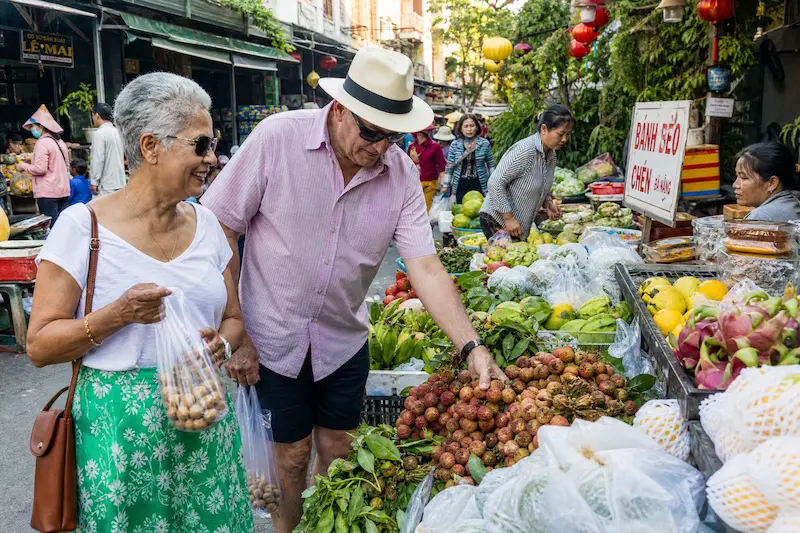
Vietnam can be a brilliant retirement choice, but the visa strategy needs to be clear before you build your life around it.
Speak with our teamVietnam has built a genuine international reputation as one of the most exciting places in Asia to live, and the retirees who have settled here are among its most enthusiastic advocates. The reasons span the practical and the personal. Vietnam is genuinely cheap, genuinely beautiful, and genuinely alive in a way that makes daily life feel active and engaged rather than passive.

Vietnam offers busy cities, beach towns, market life, cycling-friendly heritage areas and cooler highland retreats.
Explore Vietnam locationsVietnamese cuisine is one of the great food cultures of the world. It is also one of the freshest, lightest, and most regionally varied. Pho from Hanoi and banh mi from Hoi An are not the same dish prepared differently; they reflect genuinely distinct culinary traditions shaped by geography, climate, and history. Living inside this food culture, eating from street stalls and local restaurants at a fraction of Western restaurant prices, is one of the most consistently cited quality-of-life improvements for foreign residents.
Vietnam's shape produces an extraordinary range of landscapes within a single country. The north has Halong Bay's limestone karst seascape, the terraced rice fields of Sapa, and Hanoi's lakeside colonial character. The centre has the ancient town of Hoi An, the imperial capital of Hue, and Da Nang's beaches. The south has the Mekong Delta's river network, the beach resorts of Nha Trang, and the rapidly developing island of Phu Quoc. The highlands offer the cool, flower-filled town of Da Lat.
This variety means retirees can choose a lifestyle that suits them from urban to rural, coastal to highland, with the option to move as their preferences change over time.
Vietnam is the most affordable major retirement destination in South-East Asia for everyday costs. A couple can live comfortably in Da Nang on USD $1,500 per month, and well in Ho Chi Minh City on USD $2,000. These are not bare-bones budgets. They include eating out regularly, hiring household help, paying for health insurance, and enjoying an active social life. The savings compared to Western cities are large enough to fundamentally change what is possible in retirement.
Vietnamese culture reflects its history: Chinese influence in the north, Cham and Khmer influence in the centre and south, French colonial legacy visible in the architecture and food, and an American chapter whose consequences are still present in the landscape and in living memory for older generations. The result is a layered, complex culture that rewards genuine curiosity and engagement.
Vietnamese people are generally warm toward foreign residents, particularly in non-tourist contexts where relationships have time to develop. The language is tonal and genuinely difficult for most Western learners, which makes the effort of learning even basic phrases particularly appreciated.
Vietnam's primary challenge for retirees is the absence of a dedicated retirement visa. Long-term legal residency requires planning, and the most accessible option for many retirees, the 90-day e-visa cycle, involves periodic border exits. This is manageable but it requires organisation.
Traffic in major cities, particularly Ho Chi Minh City and Hanoi, is dominated by motorbikes and can be genuinely chaotic. Air quality in both major cities can be poor, particularly during dry season. Healthcare, while improving rapidly, does not yet match the private hospital standards available in Singapore, Malaysia, or major Thai cities. And the language barrier is real; Vietnamese is harder for most Western learners than Thai, Malay, or Filipino.
None of these are reasons to avoid Vietnam. They are reasons to choose your destination carefully, prepare your visa strategy in advance, and arrive with a clear set of expectations grounded in current conditions rather than outdated guides.
The most important thing to understand about retiring to Vietnam is this: there is no dedicated retirement visa. As of 2026, Vietnamese immigration law does not provide a visa category based on retirement status, age, or pension income. Retirees must use one of the general long-stay pathways available to all foreigners.
This is not an obstacle that prevents retirement in Vietnam. Hundreds of thousands of foreign nationals live here long-term. It simply requires planning your visa pathway based on your personal circumstances, rather than applying through a dedicated retirement programme.

Because there is no dedicated retirement visa, your pathway may involve e-visas, sponsorship, a TRC, investment or family eligibility.
Ask about visa supportAvailable to nationals of all countries since August 2023. Single or multiple entry for up to 90 days. Applied for entirely online through Vietnam's official e-visa portal: evisa.gov.vn. The most practical option for initial stays and for retirees who are comfortable with periodic border exits to reset their stay.
Nationals of 13 countries currently enjoy visa-free entry for up to 45 days: Germany, France, Italy, Spain, United Kingdom, Russia, Japan, South Korea, Denmark, Sweden, Norway, Finland, and Belarus. This exemption is currently extended to March 2028 under Vietnamese government resolution. Visa-free stays are typically not extendable and cannot be combined to extend a stay beyond the 45-day limit without leaving the country.
The most stable long-term residency option available to foreign nationals in Vietnam. Valid for periods ranging from 6 months to 5 years depending on the qualifying category, and renewable. Provides greater residency security than repeated e-visa cycles. Requires a Vietnamese sponsor, which can be an employer, an educational institution, a registered company, or a Vietnamese family member.
The DT investor visa category is tied to capital invested in a registered Vietnamese company. The duration is linked to the investment amount. The DT4 category, for investments under VND 3 billion (approximately USD $120,000), is typically issued for one year and renewable. A genuine, documented investment is required; this is not a nominal arrangement.
The most common approach among retirees who have not secured a TRC or investor visa is to use the 90-day multiple-entry e-visa and make a short border exit every 90 days to reset their permitted stay. A short trip to Cambodia, Laos, or Thailand accomplishes this and doubles as a regional travel opportunity.
This approach works practically and is used widely. However, it is not a long-term legal residency status. Overstays are taken seriously by Vietnamese immigration, with fines scaled to the number of days exceeded and potential deportation or entry bans for significant violations. Always track your visa expiry date and do not assume extensions are guaranteed. For retirees wanting genuine long-term stability, the TRC pathway is worth pursuing from the start.
Vietnam's Tourism Advisory Board has formally proposed a Golden Visa valid for 5 to 10 years, aimed at individuals making economic, scientific, or cultural contributions. Separately, Decree 221/2025 introduced a 5-year visa exemption card for priority groups including experts, investors, and high-skilled individuals, with each stay allowing up to 90 days.
Neither of these is a retirement visa in the traditional sense, and neither is currently available to retirees on the basis of retirement status alone. They are mentioned here because they reflect the direction of Vietnamese visa policy and may in future offer relevant pathways. Verify the current status of both programmes before making any plans based on them.
Foreign nationals legally married to a Vietnamese citizen can apply for a marriage-based TRC valid for 3 years, renewable, with a straightforward process relative to other TRC categories. After holding a marriage-based TRC for 3 consecutive years, the holder may become eligible to apply for a Permanent Residence Card (PRC), which provides near-citizen residency rights without a time limit. This is the most accessible pathway to permanent residency currently available to most foreign nationals in Vietnam.
Available to foreign nationals who have resided legally in Vietnam for at least 5 consecutive years and meet the relevant residency conditions. Provides the highest level of residency status for foreigners, with most rights of Vietnamese citizens except voting and certain civic functions. Renewable every 5 years. The process is involved and requires strong documentation of the entire residency period. A legal adviser experienced in Vietnamese immigration is strongly recommended for PRC applications.
Vietnam is the most affordable major retirement destination in South-East Asia for everyday costs. The savings compared to Western cities are substantial across most categories, and the quality of life achievable on a modest retirement income is genuinely high. A single person can live comfortably in Da Nang on USD $1,200 to $1,500 per month. A couple can live well in Ho Chi Minh City on USD $2,000 to $2,500.
| City Comparison | Overall Cost Saving (Excl. Rent) |
|---|---|
| Ho Chi Minh City vs New York | ~65% cheaper |
| Ho Chi Minh City vs London | ~58% cheaper |
| Ho Chi Minh City vs Sydney | ~55% cheaper |
| Ho Chi Minh City vs Toronto | ~58% cheaper |
| Da Nang vs Sydney | ~58% cheaper |
| Hanoi vs Sydney | ~56% cheaper |
Source: Numbeo cost-of-living index comparisons, 2026. Figures are approximate overall consumer price savings excluding rent. Individual outcomes vary significantly by lifestyle and specific location.
The table below uses Ho Chi Minh City as the primary reference. Hanoi is broadly similar. Da Nang, Hoi An, Nha Trang, and Vung Tau are typically 5 to 10% more affordable than HCMC across most categories.
| Item | vs New York | vs London | vs Sydney |
|---|---|---|---|
| Consumer Prices (Overall) | -65% | -58% | -55% |
| Meal for 2 (3 Courses, Mid-Range) | -78% | -72% | -70% |
| Beer (Domestic, at Restaurant) | -87% | -83% | -80% |
| Coffee | -70% | -62% | -58% |
| Bottled Water | -90% | -87% | -85% |
| Groceries (Local Produce) | -62% | -55% | -52% |
| Local Transport (Grab / Bus) | -94% | -92% | -90% |
| Utilities (Electricity / Water / Garbage) | -68% | -62% | -58% |
| Mobile Phone Plan (10GB+) | -88% | -84% | -82% |
| Internet (Unlimited Broadband) | -78% | -72% | -68% |
| Cinema Ticket | -78% | -73% | -70% |
| Rent (1BR, City Centre) | -75% | -68% | -62% |
Source: Numbeo Ho Chi Minh City data and city index comparisons, 2026. All figures are approximate. Individual outcomes vary based on lifestyle choices, specific neighbourhood, and personal circumstances.
Transport is the standout category. The Grab app for motorbike taxis (GrabBike) makes getting around Vietnamese cities extraordinarily cheap and fast. Local Vietnamese food from street stalls and neighbourhood restaurants is a fraction of any Western dining equivalent. Mobile data is among the cheapest in the world.
The savings narrow on imported goods, Western alcohol (beer taxes make imported spirits expensive), and imported food products. Air conditioning, which is a necessity rather than a luxury in the lowland climate, can produce a meaningful electricity bill during the hot season. Factor this into your budget, particularly in HCMC or Hanoi during summer months.
The Vietnamese Dong (VND) is a non-convertible currency that cannot be freely traded outside Vietnam. The exchange rate against major currencies has been broadly stable but is subject to periodic movements. Having a clear strategy for transferring retirement income into Vietnam, whether through bank transfers, Wise, or other services, and for managing exchange rate exposure over time, is worth establishing before you arrive rather than after.
Vietnam's property rules for foreigners changed significantly with the 2015 Housing Law, which for the first time allowed foreign nationals to purchase residential property in their own name. The situation has improved considerably from what older guides describe. However, meaningful restrictions remain, and understanding them clearly before making any property decision is essential.
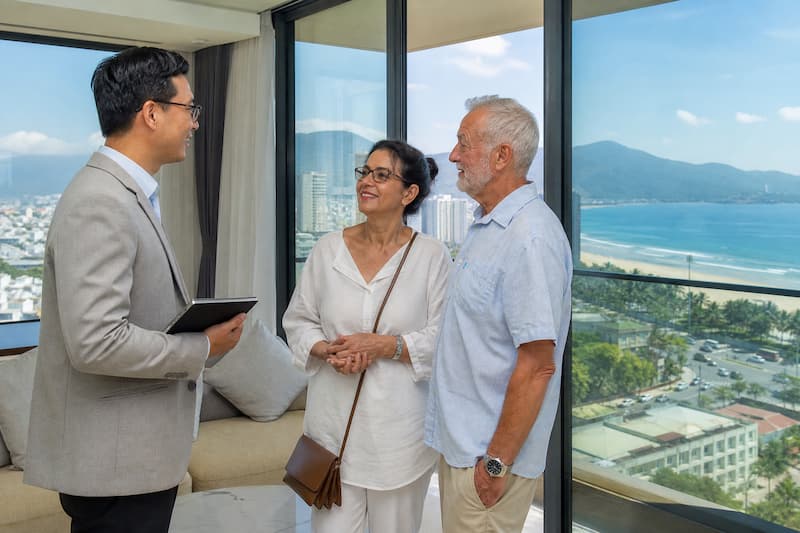
Vietnam property can work well for some buyers, but title terms, building quotas and location rules must be checked before any deposit.
Talk through property optionsForeign-owned residential property is granted on a 50-year Right to Use title. At the end of the 50-year period, the owner is entitled to apply for renewal for a further 50 years. The renewal process and its specific conditions are subject to prevailing law at the time of renewal, and while renewal has generally been granted, it is not an automatic guarantee equivalent to freehold ownership. This is a material difference from purchasing freehold property in most Western countries and should be understood before committing.
The 30% foreign ownership cap applies to the total number of units in a building, not to your individual purchase. In popular expat buildings in HCMC District 2 and District 7, Da Nang, and Hanoi's central areas, the quota can fill quickly and in some cases is already exhausted. Always verify the current foreign quota status of a specific building before proceeding. A building that exceeds the quota will not issue title to a foreign buyer regardless of how the purchase was structured.
Property purchases in Vietnam involve several fees and taxes. The buyer typically pays 5% VAT (on primary purchases from developers), a 0.5% property registration fee, and a notary fee. The seller pays capital gains tax at 2% of the transfer value. Registration and notary fees vary by transaction. Your property lawyer should provide a full breakdown before any contract is signed. All purchase contracts must be notarised to be legally valid.
For most retirees, renting before buying is not just practical advice but a genuinely better financial strategy in the Vietnamese context. The property market in major cities has seen significant price appreciation in recent years, and the combination of the 30% quota, the 50-year term, and the relatively complex due diligence process means rushed purchases carry real risk. Renting gives you time to learn specific neighbourhoods, understand the market, verify building quota status, and build the local relationships that lead to better decisions.
Healthcare in Vietnam has improved dramatically over the past two decades and continues to improve. In Ho Chi Minh City and Hanoi, the private hospital sector provides a good standard of care for most conditions at costs significantly below Western equivalents. Outside the two major cities, quality and coverage drop off, and for serious or complex conditions, transfer to HCMC, Hanoi, or internationally is a realistic consideration.
HCMC has the strongest private hospital infrastructure in the country. FV Hospital (Cho Ray French-Vietnamese) is the most internationally recognised, JCI-accredited, and handles a wide range of specialist conditions including surgery, oncology, and cardiology to a genuinely high standard. Vinmec International Hospital, Columbia Asia, Hoan My, and Raffles Medical all provide English-speaking care across the major specialities. A specialist consultation at a leading HCMC private hospital typically costs USD $30 to 80.
Hanoi's private hospital scene is anchored by Vinmec Times City, which is the strongest facility in the north and handles complex cases. Hanoi French Hospital (L'Hopital Francais de Hanoi) has a long history of expat care and is well regarded for outpatient services. Hong Ngoc Hospital provides general and specialist care. For routine and outpatient needs, Hanoi's private sector is adequate. For major surgery or complex specialist care, HCMC or internationally may provide better options.
Da Nang has a growing private clinic sector but does not yet have a hospital matching the depth of HCMC or Hanoi's leading facilities. For most day-to-day healthcare needs, Da Nang's private clinics are adequate. For complex cases, HCMC (approximately 1 hour by air) is the realistic destination. Other cities, including Nha Trang, Hoi An, Vung Tau, Da Lat, and Phu Quoc, have limited private healthcare and require planning for any serious medical need.
Vietnam's public hospital system has improved significantly but is not recommended as a primary option for foreign retirees. Public hospitals are generally underfunded, crowded, and operate almost entirely in Vietnamese. Standards vary considerably by facility and location. They should be considered an emergency fallback only, not a primary healthcare option. For official public-health updates, refer to the Vietnam Ministry of Health.
For retirees living in or visiting more remote locations, including island destinations like Phu Quoc, highland areas like Da Lat, or smaller coastal towns, a serious medical emergency may require air evacuation to HCMC or internationally. International health insurance with an explicitly stated air ambulance and medical evacuation benefit is non-negotiable for anyone not within quick access of a major private hospital. Confirm this benefit is in your policy before you arrive.
Vietnam does not currently have a mandatory health insurance requirement for foreign residents the way some neighbouring countries do for their retirement visa holders. However, the practical case for comprehensive international cover is overwhelming. Private healthcare costs in Vietnam, while cheap by Western standards, are still meaningful for major surgery or extended hospitalisation. And evacuation costs can be very high.
There is no direct equivalent to a domestic health insurance market for expats in Vietnam that competes with international providers. Most expat retirees use international policies from Cigna Global, AXA, Allianz Care, or Pacific Cross, all of which have direct billing arrangements with the major private hospitals in HCMC and Hanoi.
Pharmacies are widespread in Vietnam's cities and towns. Most common medications are available over the counter without a prescription, and costs are very low. Expats should be aware that counterfeit and expired medications exist in some pharmacies, particularly outside the major city centres. Check packaging dates carefully and use established pharmacy chains in major cities where possible. Bring an adequate supply of any critical prescription medications from your home country for initial months while you establish a reliable local supplier or prescription source.
Daily life in Vietnam is rewarding for those who approach it with genuine curiosity and patience. It is not always easy. The country operates on its own rhythms, the language is genuinely difficult, and the gap between how things work on paper and how they work in practice can be considerable. But the retirees who engage with Vietnam on its own terms consistently describe a quality of daily life that they would not trade.
Vietnamese is the national language and is spoken by almost everyone. It is a tonal language with six tones, which makes it one of the more challenging for Western learners. English is spoken in tourist areas, major hotels, private hospitals, and international businesses in HCMC and Hanoi, but proficiency drops off quickly outside these contexts. In Da Nang and Hoi An, English is more widely available than in Hanoi or the provinces.
Learning even basic Vietnamese, greetings, numbers, food vocabulary, and navigation phrases, generates exceptional goodwill and makes daily interactions significantly more rewarding. Most long-term foreign residents attempt at least some Vietnamese study and find it changes their relationship with the country meaningfully.
The Grab app (motorcycle taxi, car, and delivery) is the dominant and most practical way to get around Vietnamese cities. It is cheap, fast, and provides fare transparency before you book. GrabBike (motorcycle taxi) is particularly useful in congested city centres where cars get stuck in traffic. In HCMC, the metro system (Ben Thanh to Suoi Tien line) now operates and is being extended; additional lines are under construction.
Traffic in HCMC and Hanoi is dominated by motorbikes and can feel chaotic to newcomers. Crossing the road requires understanding the flow: Vietnamese drivers adjust around pedestrians who move slowly and steadily, rather than stopping for them. Driving a personal vehicle requires a Vietnamese licence for stays beyond a short visitor period, and road safety statistics reflect the genuine risks involved. Many long-term expats choose not to drive and use Grab exclusively.
Major Vietnamese banks including Vietcombank, BIDV, Techcombank, and VPBank have English-language online banking and widespread ATM networks. HSBC and ANZ also operate in Vietnam with expat-oriented services. Opening a bank account as a foreigner requires a valid visa and passport; a TRC significantly simplifies the process. The Vietnamese Dong is non-convertible internationally; Wise and similar services are commonly used by expats for incoming transfers at competitive exchange rates.
Vietnam has fast, reliable 4G coverage across major cities and most towns, and 5G is expanding in HCMC and Hanoi. The main mobile providers are Viettel, Vinaphone, and Mobifone. Prepaid SIM cards with generous data allowances are inexpensive and available at the airport and most convenience stores. Fixed broadband via FPT Telecom is widely available in urban rental accommodation and is generally fast. Some content is restricted by Vietnam's internet filtering system, and a VPN is commonly used by foreign residents to access standard international services.
Vietnam is governed by the Communist Party of Vietnam, which is the sole political party. In practice, the economy is market-oriented and daily life for most residents and foreign nationals is not meaningfully different from other South-East Asian countries in most respects. However, freedom of political expression is limited, and publicly criticising the government or the political system carries legal risk. Foreign nationals who respect this context and focus on day-to-day engagement with the culture rather than political commentary generally experience no difficulty.
Vietnamese society places strong value on family, community, and respect for elders. Relationships develop through consistent presence and genuine engagement rather than transactional interactions. Retirees who invest time in building real relationships with Vietnamese neighbours and community members consistently describe this as one of the most enriching aspects of their time in the country.
Air quality in Hanoi and Ho Chi Minh City can be poor, particularly during the dry season and periods of high traffic and industrial activity. Both cities regularly record AQI levels that are classified as unhealthy for sensitive groups. Retirees with respiratory conditions, asthma, or cardiovascular issues should research current air quality conditions for their intended city and factor this seriously into their decision. Da Nang, coastal towns, and highland areas generally have better air quality than the two major cities.
Vietnam's north-to-south geography means the retirement experience varies considerably by location. Climate, culture, pace of life, infrastructure, and healthcare access all differ meaningfully between cities. The eight destinations below cover the most established and popular retirement locations in the country; the official Vietnam tourism website is also useful for checking regions, seasonal travel ideas, and destination context. Click any destination to expand the guide.
North (Hanoi, Sapa): Four seasons. Cool and dry winters (November to March, temperatures sometimes dropping to 10 to 15°C). Hot and humid summers (June to August). Rainy season May to September.
Central (Da Nang, Hoi An, Hue, Nha Trang): Hot and dry from February to August. Wet season September to January with typhoon risk from September to November. Da Nang and Hoi An can experience serious flooding during the wet season.
South (Ho Chi Minh City, Vung Tau, Phu Quoc): Two seasons. Dry season November to April. Wet season May to October with daily afternoon rain. Consistently hot year-round (28 to 35°C).
Highlands (Da Lat): Significantly cooler year-round due to elevation (1,500m). Temperatures typically 15 to 25°C. Wet season May to November.
Da Nang, Hoi An, Hanoi, HCMC, Nha Trang, Vung Tau, Phu Quoc and Da Lat all offer very different retirement lives.
Compare Vietnam locations| Destination | Best For | Relative Cost | Healthcare Access |
|---|---|---|---|
| Ho Chi Minh City | Urban, best healthcare, expat hub | Mid (Vietnam scale) | Best in Vietnam |
| Hanoi | Culture, history, northern lifestyle | Mid | Very good |
| Da Nang | Beach, liveable city, central location | Low-mid | Good (improving) |
| Hoi An | Heritage, charm, slower pace | Low-mid | Limited (Da Nang 30 min) |
| Nha Trang | Beach resort, established expat community | Low-mid | Adequate |
| Vung Tau | Beach near HCMC, affordable, quiet | Low | Adequate (HCMC 2 hours) |
| Phu Quoc | Island, growing infrastructure, beaches | Mid | Limited (transfer to HCMC) |
| Da Lat | Cool climate, highlands, French character | Lowest | Limited (transfer to HCMC) |
Ho Chi Minh City is Vietnam's commercial capital and home to the largest concentration of foreign residents in the country. The pace is intense, the energy is relentless, and the variety, from world-class Vietnamese food to international restaurants to rooftop bars to cultural centres, is genuinely extraordinary. For retirees who want full urban infrastructure and the best healthcare in the country, HCMC is the natural base. Districts 1, 2 (Thao Dien), 3, and 7 (Phu My Hung) are the main expat areas, each with a distinct character and price point.
Hanoi is a city of extraordinary character that consistently surprises retirees who arrive with low expectations shaped by Vietnam's reputation as a beach and southern destination. The Vietnamese capital is a city of lakes, tree-lined boulevards, French colonial architecture, ancient temples, and a food culture that many argue is the finest in the country. It has a different tempo from HCMC: slightly slower, more formal, with a stronger sense of tradition and cultural pride. The expat community is smaller than HCMC but well-established, and the Tay Ho (West Lake) district provides the natural expat residential heartland.
Da Nang is consistently rated Vietnam's most liveable city and has been building its international expat reputation steadily over the past decade. It sits at the geographical centre of the country, with a 30-minute drive to the ancient town of Hoi An to the south and a 2-hour drive to the imperial capital of Hue to the north. The city has a genuine beach, good infrastructure, an international airport, a growing private healthcare sector, and a pace of life that feels genuinely manageable after the intensity of HCMC or Hanoi. My Khe Beach and An Bang Beach are the main expat coastal areas.
Hoi An is one of the most beautiful small towns in South-East Asia and one of the most consistently cited favourites among foreign retirees in Vietnam. The UNESCO-listed Ancient Town, with its preserved merchant houses, painted facades, lanterns, and pedestrian-only historic centre, creates a living environment unlike anything else in the region. The surrounding area offers beach access at An Bang Beach (3km from the old town), a thriving tailoring scene, excellent Vietnamese and international restaurants, and a pace of life that is genuinely slow by Vietnamese standards.
Nha Trang is Vietnam's best-known beach resort city and has had an established international expat community for longer than most other cities in this guide. The city sits on a crescent bay with a long beach promenade, a developing waterfront, and good road and air connections. The surrounding ocean is warm year-round and the bay's geography provides reasonable shelter from rough weather. Nha Trang's international community has historically included a large Russian-speaking population, which has shaped some of the city's restaurant and service offerings; this is a neutral observation rather than a positive or negative, but worth knowing before you visit.
Vung Tau is a beach city in Ba Ria-Vung Tau province, approximately 2 hours from Ho Chi Minh City by road or 90 minutes by fast ferry. It has historically been a weekend escape for HCMC residents and has a resident expat community drawn by its relative affordability, beach access, and proximity to the capital's services. The city has a distinctly more relaxed pace than HCMC and a character shaped by its oil industry history. It is not a glamorous destination, but for retirees who want a functional, affordable base near Vietnam's strongest healthcare and airport infrastructure without actually living in HCMC, Vung Tau has real practical appeal.
Phu Quoc is Vietnam's largest island, located off the south-west coast in the Gulf of Thailand. It has undergone extraordinary development over the past decade, transforming from a quiet fishing island into a significant international tourism destination with a major international airport, casino resorts, luxury hotels, and a rapidly growing residential property market. Foreign visitors entering Phu Quoc directly can stay for up to 30 days without a visa, regardless of nationality, provided they do not travel to other parts of Vietnam during that stay. The island's beaches, particularly Long Beach (Bai Truong) and the quieter north, are genuinely beautiful.
Da Lat is Vietnam's answer to the hill station tradition of the colonial era, and it delivers on that premise in a way that is genuinely surprising to first-time visitors. Sitting at 1,500 metres above sea level in the Central Highlands of Lam Dong province, it has a cool, pleasant climate year-round, a landscape of pine forests, flower farms, and vegetable gardens unique in tropical Vietnam, and a French colonial architectural legacy that gives the city a distinctly European flavour. The food scene is excellent, the pace is unhurried, and the natural environment, including Datanla waterfall, Prenn Pass, and the surrounding lakes, is beautiful. The cost of living is the lowest of any destination in this guide.
The information on this page reflects our best understanding of the rules, costs, and conditions applicable to foreign retirees in Vietnam as of June 2026. Vietnamese immigration law, visa policies, tax regulations, property rules, healthcare conditions, and general living costs change regularly and sometimes with limited advance notice. Vietnam's visa system in particular has been subject to significant and rapid changes since 2023; any information from sources written before 2024 about specific visa categories, costs, or long-stay options should be verified against current Vietnamese government guidance before being relied upon. The official e-visa portal is evisa.gov.vn; the Ministry of Public Security administers immigration matters. Cost-of-living figures are based on Numbeo city comparison data and verified expat information for 2026; they are approximate and individual outcomes vary based on lifestyle, specific location, currency movements, and personal circumstances. Nothing on this page constitutes legal, financial, immigration, tax, or medical advice. Tax obligations vary by nationality; the Vietnamese tax system has specific provisions for foreign residents and appropriate advice from a qualified Vietnamese tax adviser is recommended before establishing long-term residency. Property ownership by foreigners in Vietnam is subject to quota limits, location restrictions, and a 50-year term structure that differs materially from freehold ownership; independent legal advice from a qualified Vietnamese property lawyer is essential before any property transaction. We strongly recommend that you independently verify all information relevant to your specific situation, consult a licensed immigration professional for visa matters, and speak with a qualified medical professional regarding your healthcare situation and how it relates to your chosen location in Vietnam. RetireToAsia.com accepts no liability for decisions made in reliance on information contained on this page.