
The Philippines is one of the most unique retirement destinations in the world, and one of the most misunderstood. It is an archipelago of more than 7,600 islands spread across the western Pacific Ocean.
That scale matters. The lifestyle available to a retiree in the highlands of Baguio, the surf breaks of Siargao, the colonial streets of Dumaguete, or the waterfront community of Subic Bay are not variations of the same experience. They are genuinely different ways of living, connected by a common language, a warm culture, and an extraordinary natural backdrop.
English is spoken as a first or second language by the vast majority of Filipinos, which removes one of the most significant barriers to daily life that foreign retirees face in the region. The cost of living is among the lowest in South-East Asia. The people are widely regarded as among the warmest and most welcoming in the world. And the SRRV retirement visa, which was restructured in September 2025, remains one of the most straightforward and genuinely retiree-friendly long-stay programmes in Asia, with lifetime validity and no annual renewal requirement.
This guide covers what you need to know to make an informed decision: the visa programme in its current 2025/2026 form, what things actually cost, how property ownership works, the honest picture on healthcare, what daily life involves, and an honest destination-by-destination guide across eleven of the most popular retirement areas in the country. Read this carefully, verify anything decision-critical with a qualified local adviser, and if an area interests you, visit before you commit.
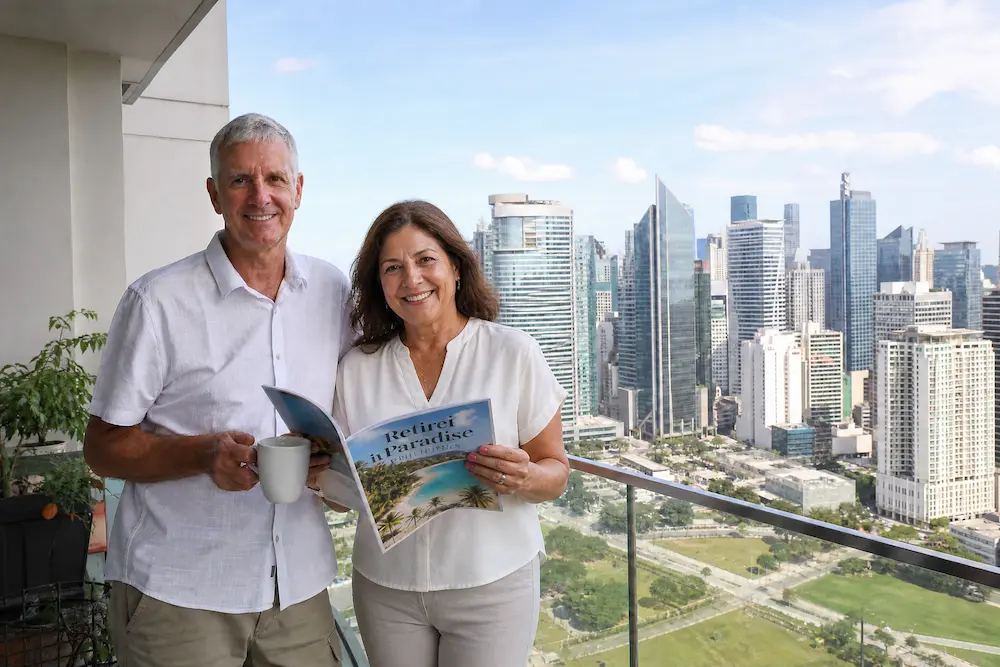
Use this guide as your starting point, then speak with us before committing to visas, property or healthcare arrangements.
Speak with our teamThe Philippines draws retirees from across the world, and the reasons are distinct enough from other destinations in the region that it has built a loyal and substantial international retirement community of its own. At its core, the appeal is about connection: the ease of communicating in English, the warmth of Filipino hospitality, the cultural familiarity that comes from a country shaped by centuries of Spanish and American influence, and a social environment that welcomes foreign residents as participants rather than observers.
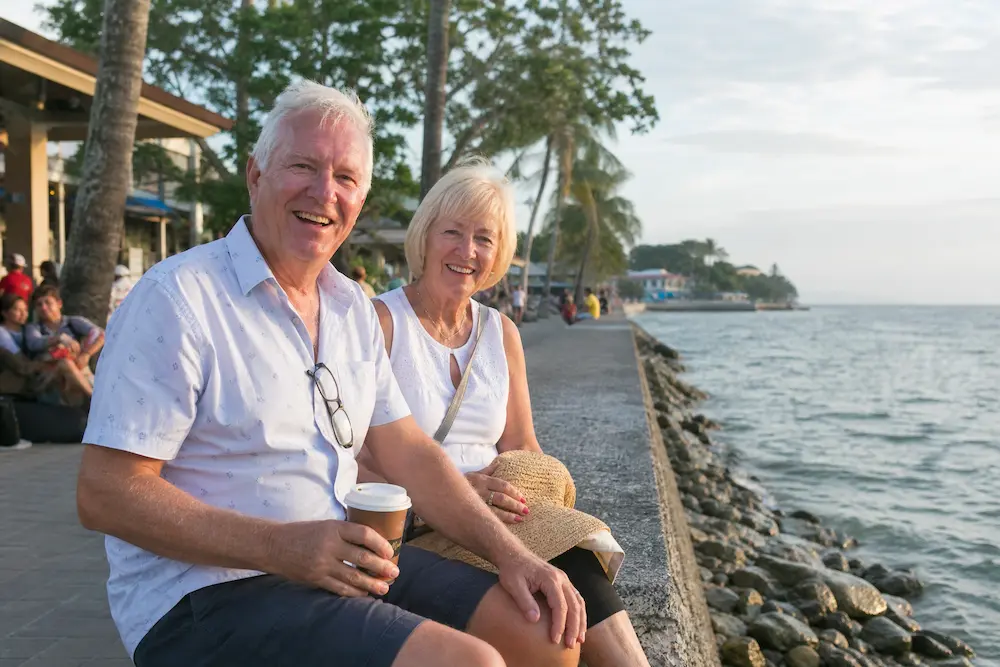
The Philippines can be urban, coastal, highland, island-based or community-focused. The right fit depends on your health, budget and daily rhythm.
Explore your optionsFilipino (Tagalog) is the national language, but English has official language status and is the medium of instruction in schools, the language of business and government, and the everyday working language of most urban Filipinos.
For retirees, this means that medical appointments, legal dealings, banking, shopping, and the full range of daily interactions are accessible without a language barrier from the moment of arrival. In no other country in South-East Asia is English so genuinely embedded into everyday life at this scale. For many retirees, this single fact removes the largest practical obstacle to making the move.
Filipino culture is shaped by a complex history: indigenous Austronesian traditions, over three centuries of Spanish colonial rule that introduced Catholicism (now practised by approximately 86% of the population), and nearly half a century of American influence that left its mark on the education system, the legal framework, and the English language.
The result is a culture that feels distinctly familiar to Western retirees in ways that many other destinations do not, while retaining a warmth and communal spirit that is entirely its own. The concept of bayanihan, meaning communal solidarity and mutual support, runs through Filipino social life and is felt particularly strongly in smaller towns and provinces.
Filipinos are widely regarded as among the most welcoming people in the world toward foreign visitors and residents. This is not a superficial tourist-industry warmth; it extends into communities, neighbourhoods, and daily social interactions in a way that long-term residents consistently describe as one of the most important contributors to their quality of life.
The Philippines contains some of the most extraordinary natural environments in Asia. Palawan's underground river and limestone karst seascape is listed among the New Seven Wonders of Nature. The Chocolate Hills of Bohol are unlike anything else on earth. The coral reef systems around Apo Island, Tubbataha Reef, and dozens of other dive sites are among the most biodiverse on the planet.
Siargao's Cloud 9 surf break is world-famous. And across the archipelago, the combination of volcanic mountains, tropical forest, white-sand beaches, and warm clear water creates a physical environment of genuinely rare beauty. Retirees who choose the Philippines for its natural environment rarely feel they have settled for second-best.
The cost of living in the Philippines is significantly lower than in most Western countries and compares favourably with other retirement destinations in the region. A comfortable retirement lifestyle in Cebu or Dumaguete is achievable at a budget that would feel extremely stretched in any Western city. Manila's Makati and BGC are the most expensive areas in the country but remain dramatically more affordable than equivalent living standards in London, New York, or Sydney. Outside the capital, costs fall noticeably and quality of life remains high.
The Special Resident Retiree's Visa is lifetime-valid, requires no annual renewal with immigration authorities, allows multiple entry and exit with no exit clearance required, and comes with genuine practical benefits including a one-time duty-free household goods importation allowance and travel tax exemptions. These are meaningful lifestyle advantages over annual-renewal visa structures and make the Philippines one of the most administratively comfortable retirement destinations in the region once the initial SRRV is obtained.
The Philippines has real challenges that matter for retirement planning. Infrastructure outside the major cities can be unreliable: power outages (known locally as brownouts), water supply interruptions, and variable road quality are realities in many areas. Healthcare, while excellent in major urban centres, is variable and in some rural locations genuinely limited.
The country sits squarely in the typhoon belt, and serious typhoons affect various parts of the archipelago every year. Property insurance and location awareness are not optional. Traffic in Metro Manila is among the worst in the world by measured commute time. And some parts of the country, particularly in Mindanao, carry active travel advisories from Western governments that need to be respected and understood before choosing a destination.
None of these challenges are reasons to avoid the Philippines. They are reasons to choose your specific destination carefully, plan your infrastructure, obtain proper insurance, and arrive with clear eyes rather than brochure expectations. Retirees who do this consistently report a quality of life that rewards the preparation.
The Special Resident Retiree's Visa (SRRV), administered by the Philippine Retirement Authority (PRA), is the primary long-stay visa available to foreign retirees in the Philippines. It underwent a significant restructuring on 1 September 2025. The SRRV Smile and SRRV Human Touch categories were abolished. Only two categories now exist: SRRV Classic and SRRV Courtesy. The minimum age was also lowered from 50 to 40, with two separate deposit brackets applying to the 40 to 49 and 50 and over age groups.
If you have researched the SRRV programme from any source written before September 2025, the specific categories, deposit amounts, and eligibility rules you read about may no longer be accurate. The information below reflects the current 2026 position. Always verify current requirements directly with the PRA at pra.gov.ph before submitting any application or committing any funds.
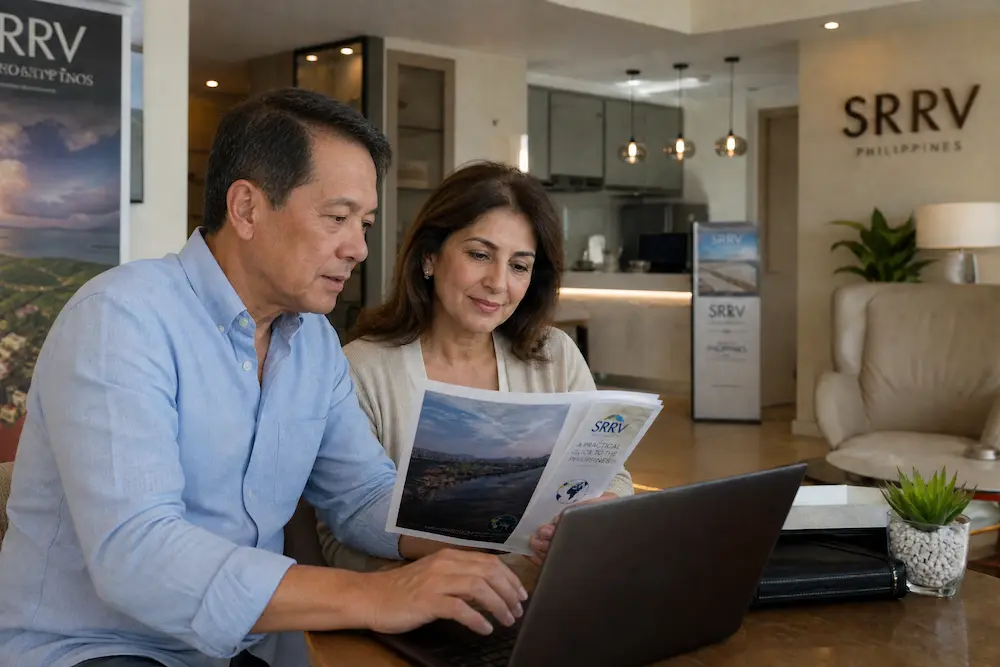
The Philippines retirement visa is attractive, but the 2025 restructure changed categories, deposits and age brackets. Check the pathway before moving funds.
Ask about visa supportThe standard pathway for foreign retirees aged 50 and over. Lifetime validity with no annual renewal at the Bureau of Immigration. Multiple-entry privileges, no exit clearance required. Available to nationals of most countries.
Added under the September 2025 restructure, opening the SRRV to younger retirees. Same lifetime validity and multiple-entry privileges as the 50+ Classic. Higher deposit requirements apply to reflect the longer anticipated stay period.
Available to former Filipino citizens, honorary consuls, retired foreign diplomatic officers who served in the Philippines, and current and former staff of international organisations including the Asian Development Bank. Significantly lower deposit requirements.
Foreign nationals legally married to a Philippine citizen can apply for the 13A non-quota immigrant visa, which gives permanent residence rights. Not a retirement-specific visa but a valid and commonly used long-stay pathway for those in qualifying relationships.
| Category | Age 50+ | Age 40 to 49 |
|---|---|---|
| Classic with qualifying pension | USD $10,000 | USD $25,000 |
| Classic without qualifying pension | USD $30,000 | USD $50,000 |
| Courtesy (former Filipinos and eligible diplomats) | USD $1,500 | USD $3,000 |
Pension must be a lifetime pension or lifetime annuity of at least USD $800/month (single) or USD $1,000/month (with dependants) issued by an appropriate legal authority and formally apostilled. Drawdown pensions are not formally accepted by PRA. Verify current requirements at pra.gov.ph before applying.
After 30 days from SRRV issuance, holders may convert their time deposit into a qualifying investment, provided the total investment meets the minimum threshold (currently USD $50,000 combined). Approved conversion options include purchase of a condominium unit in your own name, a long-term lease of a house, condo, or townhouse for a minimum of 20 years, or purchase of golf or country club shares. A minimum deposit balance (typically USD $10,000) must remain in the PRA-accredited bank after conversion. PRA pre-approval in writing is required before any funds are released from the time deposit. Seek independent advice before initiating a conversion.
SRRV holders who wish to work in the Philippines now require an Alien Employment Permit (AEP) from the Department of Labor and Employment (DOLE) under new rules introduced in DOLE Department Order No. 248, Series of 2025, which took effect in February 2025. Previous guidance that the SRRV automatically conferred working rights is no longer accurate. If you intend to work or engage in income-generating activity in the Philippines while holding an SRRV, seek specific current advice from an immigration lawyer or PRA-accredited agent before proceeding. Some categories of work may be exempt from AEP requirements; confirm your specific situation.
The SRRV application requires a medical certificate from a PRA-accredited clinic or hospital in the Philippines, which is valid for 60 days only. Do not obtain it too early. Your police clearance must be apostilled in your country of residence (not just any country) and is valid for six months. The apostille process can take several weeks in some countries; factor this into your preparation timeline. All documents must be originals with proper apostilles or consular authentication as required for your nationality.
The Philippines offers a genuinely low cost of living by international standards, and the gap between what retirees spend here versus their home countries is large enough to materially improve quality of life. A single person can live comfortably in Cebu City on USD $1,500 per month, and very comfortably on USD $2,000. A couple can live well in Dumaguete on USD $2,000 to $2,500. Even in Manila's Makati, which is the most expensive urban environment in the country, the costs are significantly lower than any comparable Western city.
| City Comparison | Overall Cost Saving (Excl. Rent) |
|---|---|
| Cebu vs New York | ~68% cheaper |
| Cebu vs London | ~55% cheaper |
| Cebu vs Sydney | ~50% cheaper |
| Manila vs Sydney | ~45% cheaper |
| Dumaguete vs Sydney | ~55% cheaper (est.) |
Source: Numbeo city comparison data, 2026. Cebu figures from Numbeo and verified expat cost-of-living surveys. Dumaguete is estimated as approximately 10-15% lower than Cebu across most categories. Figures show approximate savings vs the reference city. Individual outcomes vary based on lifestyle choices.
The table below uses Cebu City as the reference point, as the most data-rich expat destination outside Manila. Savings in Dumaguete and other secondary cities are typically 10 to 20% greater than these figures. Savings in Manila are approximately 5 to 10% lower.
| Item | Cebu City (vs Sydney) |
|---|---|
| Consumer Prices (Overall) | -50% |
| Meal for 2 (3 Courses, Mid-Range) | -65% |
| Beer (Domestic, at Restaurant) | -70% |
| Coffee | -55% |
| Bottled Water | -75% |
| Groceries (Local Produce) | -45% |
| Local Transport (Jeepney / Grab) | -90% |
| Utilities (Electricity / Water / Garbage) | -45% |
| Mobile Phone Plan (10GB+) | -65% |
| Internet (Unlimited Broadband) | -35% |
| Cinema Ticket | -65% |
| Rent (1BR, City Centre Condo) | -65% |
Source: Numbeo and verified expat cost data, Cebu City vs Sydney, 2026. Internet savings are notably lower than other categories as Philippine broadband, while improving, has historically been more expensive relative to the region; this gap has been narrowing. All figures approximate.
Local transport, fresh food from public markets, and domestic services are where the Philippines delivers the largest savings. Eating at local Filipino restaurants and carinderias (small local eateries) rather than western dining brings costs down substantially. Household help, including full-time domestic workers (kasambahays), drivers, and gardeners, is affordable in a way that is simply not available to most Western retirees at home. These services are not luxuries in Philippine expat life; they are normal and widely used, and they meaningfully improve daily quality of life.
Utilities, particularly electricity, are notably less cheap than some retirees expect. Philippine electricity rates are among the highest in South-East Asia, and air conditioning running for extended hours in a tropical climate can produce a significant monthly bill. Factor this into your budget planning, particularly if you are in a hotter lowland area.
Philippine internet speeds and reliability have improved significantly since 2020 following regulatory changes and increased competition. Fixed broadband via PLDT, Globe, or Converge is available in most urban and suburban areas. Speeds are now adequate for streaming, video calls, and general use in most major cities. However, reliability outside the main urban centres remains variable, and connectivity in island and rural locations can be significantly limited. If reliable high-speed internet is essential to your retirement lifestyle, verify coverage in your specific area before committing to a location. Major cities such as Cebu IT Park, Makati, and BGC have excellent connectivity. Remote areas may not.
The Philippines has strict restrictions on foreign land ownership, and understanding the legal framework clearly before you make any property decision is essential. The core rule is simple: foreigners cannot own land in the Philippines. They can, however, own condominium units in their own name, and there are long-term leasehold options for those who want a house or villa. There are also conversion options available to SRRV holders who wish to apply their time deposit to a qualifying property investment.
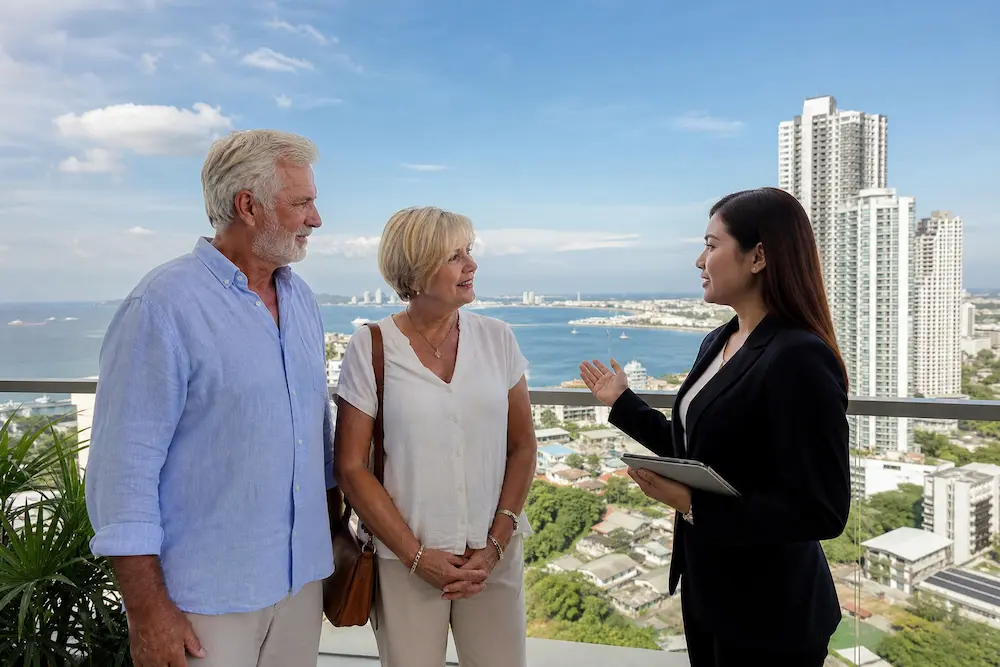
Foreigners cannot own land in the Philippines, but condos and long-term leases can work with proper legal advice and careful due diligence.
Get property guidanceFor most foreign retirees, purchasing a condominium unit is the most legally straightforward and secure form of property ownership available in the Philippines. Provided the building's aggregate foreign ownership does not exceed 40% of total units, you can hold a Condominium Certificate of Title (CCT) registered directly in your own name, giving you genuine freehold ownership of the unit with full rights to sell, rent, or pass on to heirs.
The condominium market in Metro Manila, Cebu, and other major cities is well-developed and offers a wide range of options from studio units to multi-bedroom apartments in both established and pre-selling developments. Pre-selling (off-plan) purchases come with extended payment terms but carry completion risk; buying a completed unit in an established building is lower risk, particularly for first-time buyers in the country.
Foreigners can enter into a long-term lease of land or a house-and-lot for an initial period of up to 50 years, renewable for a further 25 years. This is the legal structure most commonly used when a foreign retiree wants to live in a standalone house or villa rather than a condominium. The lease must be registered with the Registry of Deeds to be enforceable against third parties. As with any lease, the terms around extension, assignment, and the fate of any buildings constructed on the land should be clearly documented and independently reviewed by a Philippine property lawyer before you sign.
Some foreign retirees married to Filipino nationals hold property registered in their spouse's name. While common, this is important to understand clearly: legal ownership rests entirely with the Filipino spouse. In the event of separation, annulment, or the spouse's death, the foreign partner's legal rights to the property may be limited or non-existent depending on how the estate is structured. If you are in this situation, independent legal advice on how to structure the arrangement appropriately is worth obtaining.
Some advisers suggest using a Philippine corporation (at least 60% Filipino-owned) to hold land. This is a legal structure but it carries complexity: you can hold a maximum 40% stake, the majority ownership rests with Filipino shareholders, and the arrangement requires ongoing corporate compliance. If this approach is suggested to you, engage a qualified Philippine corporate and property lawyer before proceeding. The risks if the structure is not properly maintained are significant.
SRRV Classic holders can convert their time deposit into a qualifying property investment after 30 days from visa issuance, provided the total investment value meets the USD $50,000 minimum threshold. Approved uses include a condominium unit purchase, a long-term lease (minimum 20 years) of a house, condo, or townhouse, or golf and country club shares. A minimum balance (typically USD $10,000) must remain in the PRA-accredited bank after conversion. PRA written pre-approval is mandatory before any funds are released. This conversion does not change the underlying land ownership rules; foreigners still cannot own land through this mechanism.
Healthcare in the Philippines is highly variable and the gap between what is available in a well-resourced private hospital in Manila or Cebu and what is available in a rural provincial clinic is very large. For retirees who base themselves in or near a major city, private healthcare is accessible, English-speaking, and significantly more affordable than Western equivalents. For those who choose more remote or island locations, the healthcare picture requires honest assessment before committing.
Metro Manila has world-class private hospitals that deliver genuinely high-quality care across a broad range of specialities. Makati Medical Center, St. Luke's Medical Center (both Quezon City and BGC campuses), The Medical City in Pasig, and Asian Hospital and Medical Center in Muntinlupa are all well-regarded private institutions with English-speaking specialists, modern equipment, and international patient services. For complex, specialist, or time-critical care, Manila's private hospital network is the strongest in the country.
Cebu City has a strong private hospital cluster including Chong Hua Hospital, Cebu Doctors' University Hospital, and Perpetual Succour Hospital, all of which handle a wide range of conditions competently and at significantly lower cost than Manila equivalents. A specialist consultation in Cebu typically costs PHP 1,000 to 2,500 (approximately USD $18 to 44). Major surgery that would represent a catastrophic bill in the United States is manageable out-of-pocket at Philippine private hospital rates, though comprehensive international insurance remains strongly advisable.
PhilHealth is the government-operated national health insurance scheme and is open to foreign residents including SRRV holders. Enrolment requires a copy of your Alien Certificate of Registration or PRA membership card. PhilHealth provides both inpatient and outpatient cover with reimbursements up to set limits at accredited public and private hospitals. It is not a substitute for comprehensive international insurance but can offset costs at government hospitals and at PhilHealth-accredited private facilities. Annual contribution fees are low relative to the potential coverage it provides.
Outside Metro Manila, Cebu, Davao, and a small number of other provincial centres, private hospital coverage drops off significantly. Smaller cities and municipalities may have only one or two private clinics or hospitals with limited specialist coverage. In island and rural locations, medical facilities are typically limited to barangay health centres that handle basic primary care only. Anything beyond routine needs in these locations requires transfer to the nearest city, which depending on your island location may involve a boat crossing and a flight.
This is not a reason to avoid non-urban destinations, but it is a reason to map your nearest healthcare facility and understand realistic transfer times before choosing where to live. For retirees with ongoing health conditions, proximity to a full-service private hospital should be a primary factor in destination selection.
For retirees in island destinations such as Siargao, Palawan, Bohol/Panglao, or Boracay, a serious medical event requiring emergency surgery or intensive specialist care means air evacuation to Manila or Cebu. This involves coordination time, flight availability, and cost. International health insurance with an explicitly stated air ambulance and medical evacuation benefit is non-negotiable for anyone living more than an hour's drive from a major private hospital. Read the policy wording carefully; general "emergency transport" cover is not the same as dedicated air ambulance evacuation coverage.
No minimum health insurance is legally required for SRRV Classic holders, unlike some other regional retirement visa programmes. However, the practical case for comprehensive international cover is strong regardless of visa conditions. Private hospital costs, while significantly cheaper than Western equivalents, are still meaningful for major surgery or extended hospitalisation. A policy covering inpatient, outpatient, specialist consultations, and medical evacuation is the appropriate level of cover for most retirees. International providers with good Philippine hospital networks include Cigna Global, AXA, Allianz Care, and Pacific Cross.
The Philippines is one of the more immediately accessible countries in the world for English-speaking retirees. The practical challenges of daily life are real but navigable, and the social environment is warmer and more inclusive toward foreign residents than in almost any other retirement destination in the region.
Filipino (Tagalog) is the national language. English is a co-official language and the medium of instruction in schools, the language of most business, legal, and medical settings, and the everyday working language of most urban and educated Filipinos. In practice, most retirees in urban and established expat areas can conduct every aspect of their daily lives entirely in English without significant difficulty. In rural and provincial settings, some language adjustment helps but English comprehension is still broader than in most non-English-speaking countries. Learning basic Filipino or the local regional dialect (Cebuano/Bisaya in the Visayas and Mindanao, Ilocano in parts of Luzon) generates genuine appreciation and makes social connections easier.
Getting around in the Philippines varies dramatically by location. In Metro Manila, traffic is severe and the commute times between districts can be very long even over short distances. The Grab app operates across all major cities and is the most reliable, cost-transparent way to get a car. The LRT and MRT metro lines serve parts of Metro Manila but do not cover the whole city. In Cebu, Davao, and other provincial cities, Grab and local taxis are widely available. In smaller towns, jeepneys (the iconic converted jeeps that serve as fixed-route public transport), tricycles, and habal-habal (motorcycle taxis) are the primary local transport options. On islands, bangka (outrigger boats) handle inter-island movement.
Driving in the Philippines is on the right. Road conditions vary significantly; national highways are generally adequate, but provincial and barangay roads can be poor. A vehicle is very useful outside the major cities. Traffic rules are theoretically enforced but practically negotiable in many areas; if you drive, a patient and defensive approach is essential.
Major Philippine banks including BDO Unibank, BPI (Bank of the Philippine Islands), Metrobank, and UnionBank all have English-language services and ATM networks across the country. Opening a bank account as an SRRV holder is straightforward and is required for the PRA time deposit. International transfers are best handled via Wise, Revolut, or similar services for cost efficiency. The Philippine peso can experience volatility against major currencies; a clear strategy for managing exchange rate exposure over your retirement income is worth discussing with a financial adviser before you arrive.
Philippine mobile coverage has improved substantially since regulatory changes in 2019 opened the market to a third major carrier. Globe, Smart (PLDT), and DITO Telecommunity are the three main mobile providers. 4G coverage is reliable in major cities and towns. Fixed broadband via PLDT Home or Converge is available in most urban residential areas and has seen significant speed improvements. In rural and island areas, mobile data remains the primary connectivity option and speeds can be variable. A local SIM can be purchased at the airport or any convenience store; prepaid SIMs are cheap and widely available.
The Philippines is not uniformly safe, and being honest about this is important for anyone making a retirement decision. The established retirement areas covered in this guide, including Metro Manila's Makati and BGC, Cebu City, Dumaguete, Bohol, Boracay, Siargao, Palawan, Tagaytay, Baguio, and Subic Bay, are generally safe for foreign residents, and serious crime targeting foreign retirees in these areas is uncommon.
Parts of Mindanao, however, carry active travel advisories from the governments of the United States, United Kingdom, Australia, Canada, and others. The advisory situation for specific areas within Mindanao varies and changes over time. Before choosing any Mindanao destination, check the current travel advisory issued by your home country government and verify the specific situation for your intended area, not just the island as a whole. Davao City, Mindanao's largest city, has its own specific context discussed in the destination section.
In urban areas generally, petty crime including pickpocketing, bag-snatching, and phone theft in crowded areas is a more common concern than violent crime. Scams targeting foreign nationals are present in tourist areas. Exercise the same vigilance you would in any major Asian city.
The Philippines lies in one of the world's most active typhoon corridors. An average of 20 tropical cyclones enter or form in the Philippine area of responsibility every year, of which typically 8 to 9 make landfall. Typhoon season runs broadly from June to November, with the most intense storms typically occurring in September and October. The eastern coast of the archipelago, including eastern Visayas, eastern Mindanao, and eastern Luzon, tends to bear the greatest impact. Western coast destinations such as Palawan, Subic Bay, and the western side of the main islands are more sheltered but not immune.
The Philippines is also seismically active and sits on the Pacific Ring of Fire. Earthquakes are a regular occurrence. Several active volcanoes, including Taal, Mayon, Bulusan, and Kanlaon, affect areas across the archipelago and occasionally require evacuation of surrounding communities. Property insurance that covers typhoon damage and earthquake damage is not optional for homeowners and should be verified for any rental property. The Philippine Atmospheric, Geophysical and Astronomical Services Administration (PAGASA) provides storm and hazard tracking and its updates should be a regular reference for any resident during typhoon season.
The Philippines is predominantly Roman Catholic, with approximately 86% of the population identifying as Catholic. Religion is visible in daily life: churches are the social and architectural centre of every barangay (neighbourhood), the liturgical calendar shapes public life, and religious observance is taken seriously across most of the population. For retirees from secular Western backgrounds, the depth of religious practice in the Philippines is notable but is not experienced as exclusionary; Filipino hospitality extends naturally to people of all backgrounds.
Filipino culture places strong emphasis on family, on social harmony (the concept of pakikisama, meaning getting along with others), and on respect for elders, which as a foreign retiree you will typically receive naturally. Public displays of anger or impatience are deeply uncomfortable in Filipino social settings and tend to make situations worse rather than better. A calm, patient approach to difficulties is both more effective and more culturally appropriate.
The Philippines offers more variety of retirement lifestyle than almost anywhere else in the world. The eleven destinations below cover the most established and popular choices for foreign retirees, from the urban intensity of Makati to the surf-and-serenity of Siargao and the organised expat community of Subic Bay. Click any destination to expand the full guide.
Typhoon season: June to November, peaking in September and October. The eastern coast of Luzon, the Visayas, and eastern Mindanao are most exposed. Western-facing destinations (Subic Bay, Manila, western Palawan) are more sheltered but not typhoon-free.
Three broad seasons: Cool dry (December to February): most comfortable and most visited. Hot dry/summer (March to May): very hot and humid. Wet/rainy season (June to November): combines with typhoon season; rainfall can be heavy and prolonged.
Highland exceptions: Baguio and Tagaytay are significantly cooler year-round due to elevation, making them very different climatic propositions from coastal and lowland destinations.
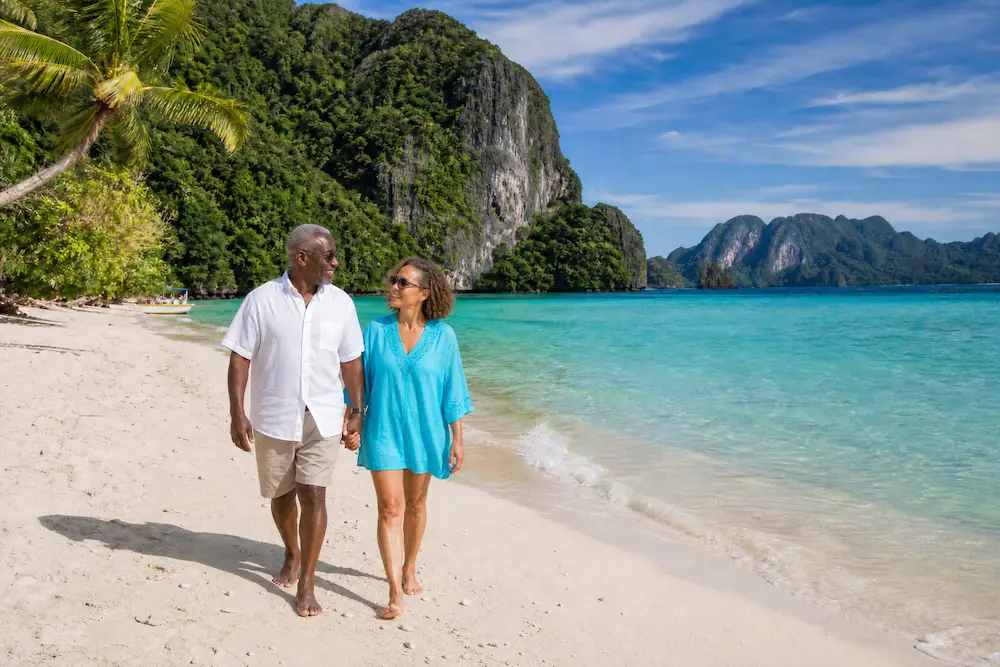
Manila, Cebu, Dumaguete, Palawan, Bohol, Baguio and Subic all suit different retirees. The right choice depends on your priorities.
Discuss where to live| Destination | Best For | Relative Cost | Healthcare Access |
|---|---|---|---|
| Manila / Makati / BGC | Urban, best healthcare, connectivity | Highest | Excellent |
| Cebu City | Second city, beaches nearby, expat hub | Mid-high | Very good |
| Dumaguete | Affordable, community, small city | Lowest | Good for its size |
| Siargao | Surf, nature, island lifestyle | Mid | Limited (transfer to Cebu) |
| Palawan / Puerto Princesa | Natural beauty, growing infrastructure | Low-mid | Limited outside Puerto Princesa |
| Bohol & Panglao Island | Natural beauty, beaches, quiet pace | Low-mid | Adequate (Tagbilaran) |
| Tagaytay | Cool climate, Manila access, scenery | Low-mid | Adequate (KL within 1 hour) |
| Baguio | Highland cool, arts, universities | Low-mid | Good (multiple private hospitals) |
| Boracay | World-class beach, resort lifestyle | Mid-high | Limited (transfer to Iloilo/Manila) |
| Davao City | Mindanao urban, fresh produce, Samal | Mid | Good (major private hospitals) |
| Subic Bay | Expat community, Freeport, duty-free | Mid | Good (Subic Bay hospitals) |
Metro Manila is the commercial, financial, and transport heart of the Philippines. For retirees, the relevant part of Metro Manila is not the city as a whole but specifically the districts of Makati and Bonifacio Global City (BGC) in Taguig, both of which function as distinct, well-managed urban environments with world-class private hospitals, international restaurants, high-quality condominium developments, and a large established expat community. These are safe, well-lit, walkable within their respective cores, and surrounded by every service a retiree could need. They are also the most expensive residential environments in the Philippines and the most distant from the beach and natural environments that draw many people to the country in the first place.
Cebu City is the Philippines' second largest city and the regional capital of the Visayas. For foreign retirees it consistently ranks as one of the most liveable cities in the country: big enough for every modern amenity, compact enough to navigate without the scale and congestion of Metro Manila, and well-positioned for access to some of the Philippines' finest beaches, diving, and island-hopping. The IT Park area and Cebu Business Park (Ayala Center) are the expat heartlands, with modern condominium stock, international dining, reliable internet, 24/7 services, and a welcoming international community. Cebu Mactan International Airport connects directly to most major Asian hubs and to Manila for onward international connections.
Dumaguete is the provincial capital of Negros Oriental and one of the Philippines' most celebrated retirement destinations. Known as the Gentle City, it has a population of around 130,000, a walkable boulevard along the waterfront, several respected universities (Silliman University being the most notable), and a warm, tight-knit international expat community that punches well above its size. The cost of living is the lowest of any major expat destination in the Philippines. Apo Island, one of the finest diving sites in the country, is a 30-minute boat ride away. The overall pace of life is genuinely, pleasantly slow.
Siargao is a teardrop-shaped island in the province of Surigao del Norte, and the surfing capital of the Philippines. The Cloud 9 surf break is internationally famous and the wave that put the island on the global map. But Siargao has grown into something considerably more than a surf destination. The island has an expanded international airport with direct connections to Manila and Cebu, a growing community of long-term foreign residents, thriving beach bars, excellent fresh seafood, and a natural environment of extraordinary beauty including the Sugba Lagoon, Magpupungko rock pools, and the three islands of Guyam, Daku, and Naked. The pace is relaxed, the community is friendly and international, and the physical setting is genuinely stunning.
Palawan is one of the Philippines' most celebrated island provinces and consistently ranks among the most beautiful destinations in Asia by international travel media. Its UNESCO-listed underground river, the limestone karst seascape of El Nido, the diving around Coron, and the vast protected areas of the Palawan Biosphere Reserve make the natural environment genuinely extraordinary. Puerto Princesa, the provincial capital, is the practical base for most long-term residents, with a domestic airport, some private healthcare, banks, and basic urban services. The island is developing steadily as a retirement destination but is at an earlier stage than Cebu or Dumaguete.
Bohol and Panglao function as a single destination for most retirees; the two are connected by a bridge, and Panglao's world-famous Alona Beach and its companion beaches are the primary draw while Tagbilaran, Bohol's capital, provides the practical infrastructure. Bohol is home to the Chocolate Hills, one of the Philippines' most iconic landscapes; the Philippine tarsier, one of the world's smallest primates; and some of the finest diving in the Visayas around Balicasag Island. Panglao's beach strip has a growing collection of resorts, dive shops, restaurants, and bars that attract both tourists and a growing number of long-term foreign residents. The Bohol-Panglao International Airport has improved access significantly, with direct connections to Manila and some regional routes.
Tagaytay sits on a volcanic ridge in Cavite province at approximately 700 metres above sea level, about 55 kilometres south of Manila. The result is a climate significantly cooler and more comfortable than the Metro Manila lowlands and the coastal areas. The ridge looks out over Lake Taal and the iconic Taal Volcano Island rising from its centre, one of the most photographed views in the Philippines. The town has good restaurants, several residential developments popular with Manila residents seeking a second home or retirement base, and golf courses that benefit from the cooler air. The proximity to Manila means access to the capital's hospitals and airport is a manageable day trip rather than a flight.
Baguio is the Philippines' designated Summer Capital, sitting at approximately 1,500 metres above sea level in the Cordillera mountains of northern Luzon. It is the coolest major city in the Philippines year-round, with temperatures typically ranging from 15 to 23 degrees Celsius, making it a genuinely comfortable environment for retirees from cooler home climates. The city has a long history of foreign and domestic retirement interest, multiple universities, a thriving arts scene, and a character distinctly different from lowland Philippine cities. Camp John Hay, a former US military rest and recreation camp, is now a heritage zone and residential area within the city that houses a significant expat community.
Boracay is a small island (approximately 10 square kilometres) in the province of Aklan that became globally famous for White Beach, one of the most consistently ranked white-sand beaches in the world. The island was closed for a six-month environmental rehabilitation in 2018 and reopened with tighter environmental controls and a reduced carrying capacity. The rebuilt Boracay is cleaner and better managed than the pre-2018 version, and the resort infrastructure along White Beach is world-class. For retirees who genuinely want to live on a beach that is considered among the world's best, Boracay delivers that in a small, walkable island setting. It is, however, a resort destination at its core, and the retiree community is smaller and less cohesive than in Cebu, Dumaguete, or Subic Bay.
Davao City is the largest city in Mindanao and one of the largest cities in the Philippines by land area. It is also one of the most contested retirement recommendations, and we address this directly. The city has a growing and active expat retirement community, excellent fresh produce (it is the durian capital of the Philippines and a significant agricultural hub), good private hospitals, a manageable scale by Philippine city standards, and offshore access to the beautiful Garden of Eden on Samal Island. It has historically recorded lower crime rates than Metro Manila and Cebu City. However, Davao is in Mindanao, and Mindanao as a whole carries travel advisories from multiple Western governments. The security situation varies significantly across the island.
Subic Bay in Zambales province is one of the Philippines' most organised and established retirement communities and carries a character entirely its own. The former United States Naval Base Subic Bay was converted into the Subic Bay Freeport Zone in 1992 after the US military withdrawal, and the infrastructure left behind by decades of American naval operations, including well-maintained roads, reliable utilities, an international airport, and a strong English-language service environment, formed the foundation of what has become one of the largest and most functional expat retirement communities in the country. The Freeport Zone itself operates under a separate administrative framework that provides a consistently maintained and regulated environment. Duty-free shopping, lower fuel prices, and a clean, safe residential environment make Subic Bay practically attractive in ways that few other Philippine retirement locations can match.
The information on this page reflects our best understanding of the rules, costs, and conditions applicable to foreign retirees in the Philippines as of June 2026. Philippine immigration law, SRRV programme requirements, tax regulations, property rules, healthcare conditions, and general living costs change regularly and sometimes with limited advance notice. The SRRV programme was significantly restructured in September 2025 and may be subject to further change; any information from sources written before September 2025 about the specific categories, deposit amounts, or eligibility rules of the SRRV should be verified against current Philippine Retirement Authority guidelines at pra.gov.ph before being relied upon. Cost-of-living figures are based on Numbeo city comparison data and verified expat surveys for 2026; they are approximate and individual outcomes vary based on lifestyle, specific location, currency movements, and personal circumstances. Nothing on this page constitutes legal, financial, immigration, tax, or medical advice. Safety and security conditions in the Philippines, particularly in Mindanao, change over time; always check the current travel advisory issued by your home country government for the specific area you are considering, not just for the Philippines as a whole. We strongly recommend that you independently verify all information relevant to your specific situation, consult a PRA-accredited SRRV agent for visa matters, obtain advice from a qualified financial and tax adviser in both your home country and the Philippines before making any decisions, speak with a qualified medical professional regarding your personal healthcare situation and how it relates to your chosen location, and obtain appropriate property, typhoon, and earthquake insurance before or upon arrival. RetireToAsia.com.au accepts no liability for decisions made in reliance on information contained on this page.