
Cambodia is the most accessible and most affordable retirement destination in South-East Asia. The visa process is the simplest in the region. No large fixed deposit. No mandatory property purchase. No minimum income written into law. The annual government fee for the retirement extension is USD $300, and it is renewable indefinitely.
Beyond the practicalities, Cambodia offers something genuinely distinctive. Angkor Wat and the broader Khmer archaeological heritage make this one of the great cultural environments on earth. The food is extraordinary. The people are warm and the Buddhist culture creates a social environment that is peaceful, unhurried, and deeply human. The cost of living allows a quality of daily life that is difficult to replicate anywhere at this price point.
Cambodia also requires honest assessment in some areas. Healthcare outside Phnom Penh is limited and medical evacuation planning is not optional. Infrastructure in provincial areas is variable. And some aspects of how things work here will require genuine adjustment for retirees used to well-functioning institutional systems. This guide covers all of it. Everything here reflects conditions as they stand in 2026.
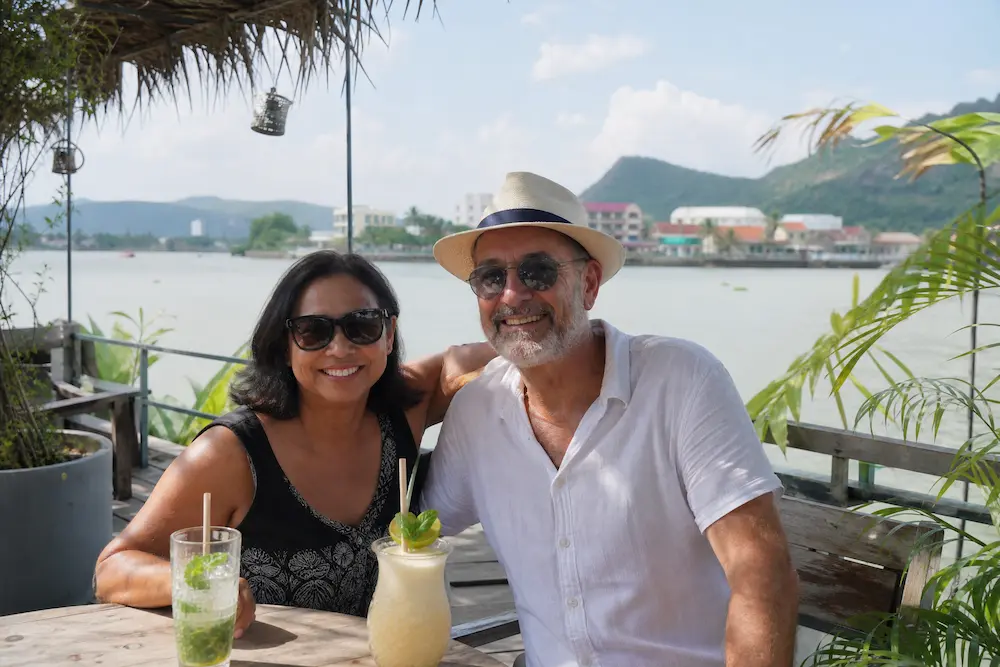
Use this guide as your starting point, then speak with us before committing to visas, property or healthcare arrangements.
Speak with our teamCambodia draws retirees who are looking for something more than comfortable retirement living, and it consistently delivers for those who choose it with clear eyes. Extraordinary affordability, genuine cultural depth, a warm and welcoming people, and the most accessible retirement visa process in the region make a compelling case. Add the food, the temples, and the quality of daily life available on a modest income, and the picture becomes even clearer.
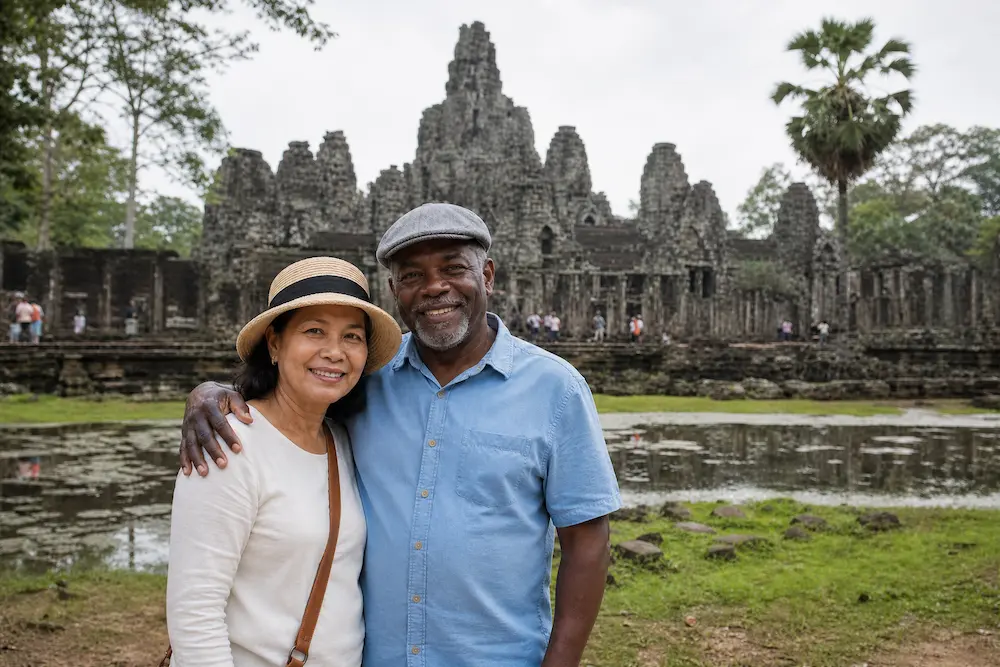
Cambodia can be urban, cultural, riverside, coastal or deeply local. The right fit depends on your health needs, budget and daily rhythm.
Explore your optionsCambodia is home to Angkor Wat, the largest religious monument on earth. The broader Angkor Archaeological Park contains hundreds of temple sites that most visitors only glimpse briefly. Living here gives you a relationship with this heritage that is genuinely different from visiting as a tourist. Beyond Angkor, Phnom Penh has a vibrant contemporary arts and restaurant scene, and Battambang has one of South-East Asia's most respected arts institutions in Phare Ponleu Selpak. Khmer traditional arts including Apsara dance, shadow puppetry, and silk weaving are living practices, not museum exhibits.
Cambodian cuisine is less internationally famous than its neighbours but is genuinely excellent and extraordinarily affordable. Fresh Kampot pepper is considered one of the world's finest spice products. Seafood along the Gulf coast is pulled from the water and cooked immediately. Street food and market stalls deliver meals that would cost ten times as much at home, at a quality that makes eating out daily both affordable and genuinely pleasurable.
Theravada Buddhism shapes Cambodian society in ways that are visible and felt in daily life. The emphasis on non-confrontation, on acceptance, and on finding peace creates a social environment that is patient, warm, and rarely aggressive. Monks make morning alms rounds through residential streets. Temple festivals mark the calendar throughout the year.
Cambodians are welcoming toward foreign residents, particularly those who engage genuinely rather than transactionally. The expat communities in Phnom Penh, Siem Reap, and Kampot reflect this: people who came for the culture and the connection, not just the exchange rate.
Cambodia operates as a dollarised economy. USD is the standard currency for rent, groceries, restaurants, and most transactions. For retirees whose income arrives in US dollars, this is entirely straightforward. For those in GBP, EUR, or AUD, it means one currency conversion at the point of transfer rather than ongoing daily exchange rate management.
No other major retirement destination in South-East Asia offers a retirement visa as accessible as Cambodia's ER extension. No minimum income is written into law. No fixed deposit. No mandatory property purchase. The annual government fee is USD $300. For retirees who have looked at the financial thresholds and administrative complexity of other regional programmes, Cambodia's approach is a genuine and meaningful differentiator.
Cambodia's healthcare system, while improving, requires the most honest assessment of any country in this guide. Private hospitals in Phnom Penh handle most routine needs well. Outside the capital, options drop off significantly. Medical evacuation to Bangkok is a realistic plan for serious conditions, and international health insurance with evacuation cover is non-negotiable.
Infrastructure outside Phnom Penh is variable. Power outages in provincial areas are more common than in neighbouring countries. Corruption is a more visible part of daily institutional life than in Malaysia or Thailand, and navigating it requires adjustment. And Cambodia operates as a one-party state; the political environment does not typically affect expat daily life but is part of the country's context.
Retirees who arrive with clear expectations and choose their location thoughtfully consistently report a quality of life they would not trade. Honest preparation, not avoidance, is what makes it work.
Cambodia's retirement visa pathway is the most accessible in South-East Asia. No minimum income is written into law. No mandatory fixed deposit. No required property purchase. The ER retirement extension is renewed annually and has no stated limit on renewals. The main practical requirements are entering on the correct visa category and completing two steps once inside the country.

Cambodia's retirement pathway is simple, but you must enter on the right visa class and complete FPCS registration before extension.
Ask about visa supportThis is the most common mistake first-time applicants make. You must enter Cambodia on an Ordinary E-class visa. Tourist T-class visas cannot be converted to the retirement extension category. When selecting your visa on arrival or applying online, choose Ordinary (E), not Tourist (T). The E-class visa costs USD $35 and is valid for 30 days on entry.
The standard retirement pathway. Applied for inside Cambodia after entering on the E-class visa. Renewable annually with no stated limit. Multiple-entry on the 12-month extension.
Functionally similar to the ER for long-stay purposes. Used by expats under 55 or those who prefer this category. Same E-class entry requirement applies. The 12-month multiple-entry version is what most long-term residents choose.
All foreigners residing in Cambodia must register in the Foreigners Present in Cambodia System. Your landlord must register your address using the GDI immigration app before you submit any visa extension. Extensions are blocked without this confirmation.
Cambodia does not have a formal permanent residency category accessible through the standard visa system. De facto long-term residency is achieved through continuous annual renewals, which have no stated limit. Foreign nationals married to Cambodian citizens have a more accessible family-based pathway.
| Duration | Government Fee | Entry Type | Best For |
|---|---|---|---|
| 1 Month | USD $45 | Single entry | Short-term trial stays |
| 3 Months | USD $75 | Single entry | Extended trial periods |
| 6 Months | USD $150 | Multiple entry | First-year flexibility |
| 12 Months | USD $285 to $300 | Multiple entry | Standard long-term residents |
No specific monthly income figure is written into Cambodian immigration law for the ER extension. However, immigration officers expect applicants to demonstrate financial self-sufficiency. The informal working benchmark is USD $800 to $1,500 per month, shown through bank statements or pension documents.
Because this is administrative practice rather than law, it can be applied inconsistently and could be formalised at any point. Keep clear documentation and work through a reputable local agent who tracks how current officers are applying the requirement.
Residing in Cambodia for more than 182 days in a calendar year makes you a Cambodian tax resident. Cambodia taxes residents on worldwide income in principle, though enforcement capacity for foreign-sourced pension income is still developing. Cambodia has a limited number of Double Taxation Agreements in force. Confirm your nationality's specific position with a qualified Cambodian tax adviser before establishing long-term residency.
Cambodia is the most affordable major retirement destination in South-East Asia. The savings compared to Western countries are substantial across almost every category. A single person can live comfortably in Phnom Penh on USD $1,000 to $1,400 per month. A couple can live well on USD $1,500 to $2,000. In provincial towns, these budgets go further still.
| City Comparison | Overall Cost Saving (Excl. Rent) |
|---|---|
| Phnom Penh vs New York | ~70% cheaper |
| Phnom Penh vs London | ~62% cheaper |
| Phnom Penh vs Sydney | ~60% cheaper |
| Phnom Penh vs Toronto | ~63% cheaper |
| Kampot / Siem Reap vs Sydney | ~65% cheaper (est.) |
Source: Numbeo city index comparisons and verified expat data, 2026. Provincial towns typically 5 to 10% cheaper than Phnom Penh. All figures approximate.
| Item | vs New York | vs London | vs Sydney |
|---|---|---|---|
| Consumer Prices (Overall) | -70% | -62% | -60% |
| Meal for 2 (3 Courses, Mid-Range) | -80% | -74% | -72% |
| Beer (Domestic, at Restaurant) | -88% | -85% | -82% |
| Coffee | -72% | -63% | -58% |
| Bottled Water | -92% | -90% | -88% |
| Groceries (Local Produce) | -65% | -58% | -55% |
| Local Transport (Grab / Tuk-Tuk) | -92% | -90% | -88% |
| Utilities (Electricity / Water) | -55% | -48% | -45% |
| Mobile Phone Plan (10GB+) | -92% | -90% | -88% |
| Internet (Unlimited Broadband) | -68% | -62% | -58% |
| Cinema Ticket | -80% | -75% | -72% |
| Rent (1BR, City Centre) | -80% | -74% | -72% |
Source: Numbeo Phnom Penh data and city index comparisons, 2026. All figures approximate. Provincial towns typically 5 to 10% cheaper than Phnom Penh.
Transport, mobile data, and fresh food from local markets deliver the largest proportional savings. Getting around by tuk-tuk or Grab costs almost nothing compared to Western equivalents. Eating at local Cambodian restaurants produces savings well above the average figures shown. Household help including domestic workers and drivers is affordable in a way simply not available to most retirees at home.
The savings narrow on electricity. Cambodia's power costs are among the higher in the region, and air conditioning during the hot season produces a meaningful monthly bill. Budget separately for this rather than rolling it into a general living cost estimate.
USD is used for rent, groceries, restaurants, professional services, and major purchases. The Cambodian Riel handles small change only. For retirees whose income arrives in USD, this removes daily exchange rate management entirely. For those in GBP, EUR, or AUD, a single conversion at the point of transfer is all that is needed. Wise and similar services provide the most cost-effective way to transfer retirement income into Cambodia from overseas.
Cambodia's property framework for foreigners improved significantly with the 2010 Law on Co-ownership, which for the first time allowed foreign nationals to own residential property in their own name. The core restriction remains: foreigners cannot own land. Strata-titled condominium units can now be owned freehold by foreign nationals, providing a legally clear ownership path that did not previously exist.
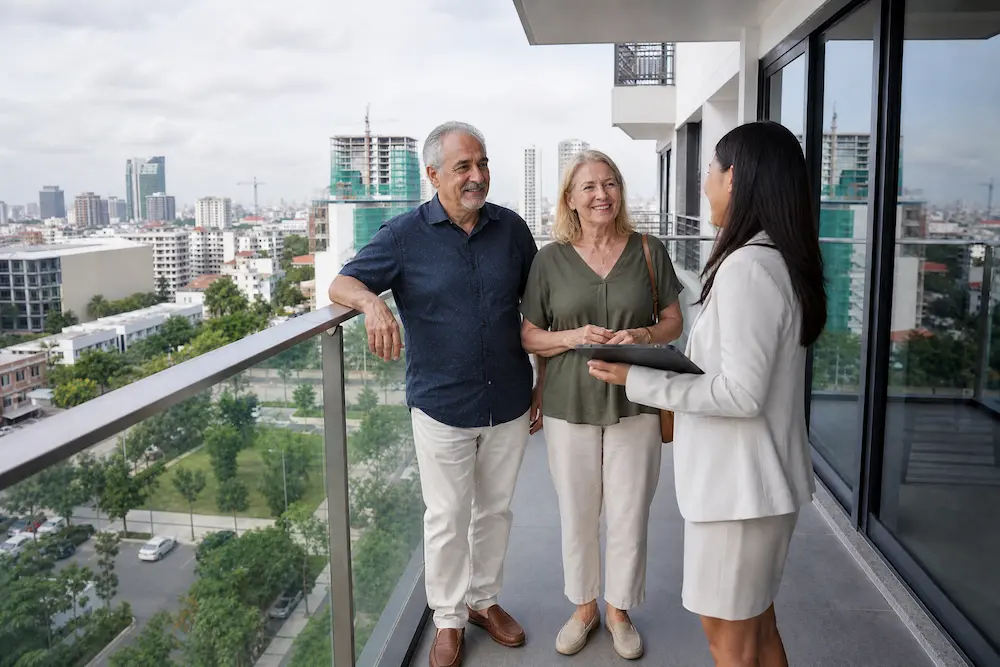
Foreigners can own strata-title condos, but land, leasehold structures and company ownership need careful legal review.
Talk through property optionsPurchasing a strata-titled condominium unit on the first floor or above is the safest and most legally clear ownership path for foreign nationals. The title is registered in your name at the Land Registry and provides clear freehold rights including the right to sell, rent, or pass on to heirs.
Not all buildings have strata title. Before committing to any purchase, verify that the specific building holds proper strata documentation and that the developer's title chain is legitimate. This requires a qualified Cambodian property lawyer, separate from the selling agent or developer.
Foreigners who want a house or villa must use a leasehold structure. Two types exist: a soft lease (less formally registered, lower security) and a hard lease (registered at the land office, more legally robust). Hard leases are the appropriate choice for any long-term commitment. Lease terms in Cambodia can extend to 99 years, but terms and renewal conditions must be verified and documented by a lawyer before signing.
Cambodia introduced a Capital Gains Tax on property transactions effective January 2026. This affects the cost of selling property and investment return calculations. The specific rate and structure for your transaction type must be confirmed with a qualified tax adviser or property lawyer. The rules are new and interpretations may evolve in the early implementation period. Confirm the current CGT position before any purchase or sale.
Cambodia's property market has documented cases of title fraud, incomplete constructions, and developments sold without proper strata title approval. Specific risks include buildings with incomplete strata documentation, stalled or failed developments particularly in Sihanoukville, soft leases presented as equivalent to hard leases, and company structures claiming to give foreigners land ownership without legal basis. Always engage a qualified Cambodian property lawyer, separate from the selling agent, before committing any funds.
Renting first while you learn specific neighbourhoods and verify the market properly is the most straightforward approach for most new arrivals.
Healthcare in Cambodia has improved considerably over the past two decades and continues to develop. In Phnom Penh, the private hospital sector provides a good standard of care for most routine and non-critical conditions at costs dramatically lower than Western equivalents. Outside the capital, options drop off significantly. For serious, complex, or specialist conditions, medical evacuation to Bangkok remains a realistic and commonly used plan.
Phnom Penh's strongest private facilities include Royal Phnom Penh Hospital, affiliated with Bangkok Hospital Group and the most internationally recognised; Sunrise Japan Hospital with Japanese-standard protocols particularly strong in internal medicine; Calmette Hospital with French-trained staff used by the diplomatic community; and Raffles Medical for expat-oriented primary care. A specialist consultation typically costs USD $30 to 80.
Siem Reap has private clinics adequate for routine needs. Kampot, Kep, and Battambang have basic clinic facilities for minor issues. For anything serious occurring outside Phnom Penh, transfer to the capital or evacuation to Bangkok is the plan. Kampot to Phnom Penh is 2.5 to 3 hours by road. Siem Reap is 5 to 6 hours by road or 45 minutes by domestic flight. Know the logistics before you need them.
Medical evacuation to Bangkok is a documented, regular outcome for foreign residents in Cambodia who experience serious cardiac events, major trauma, or conditions requiring tertiary specialist care. Air evacuation from Phnom Penh to Bangkok costs USD $3,000 to $8,000 or more. Standard travel insurance policies frequently exclude or severely limit this coverage.
You need an international health insurance policy with a clearly and specifically stated air ambulance and medical evacuation benefit. Read the policy wording carefully. Confirm this cover is in place before you arrive, not after.
Medications are widely available over the counter and prices are low. Counterfeit and expired medications exist in smaller independent pharmacies, particularly outside major cities. Use established pharmacy chains including U-Care Pharmacy and Pharmacie de la Gare in Phnom Penh. Bring an adequate supply of any critical prescription medications from your home country for your first months while you establish a reliable local source.
No health insurance is legally required for the ER visa. In practice, arriving without comprehensive international cover including medical evacuation is a serious financial and safety risk. International providers with direct billing at Phnom Penh's private hospitals include AXA, Cigna Global, and Pacific Cross. Arrange cover before you arrive and confirm evacuation cover is explicitly included in the policy.
Daily life in Cambodia is genuinely rewarding for retirees who engage with it openly. Some of the differences from home are delightful. Some require adjustment. Understanding both before you arrive makes the transition significantly smoother.
Khmer is the national language with its own distinctive script. It is non-tonal, which makes it more learnable than Thai or Vietnamese for most Western retirees. English is widely spoken in expat areas of Phnom Penh, Siem Reap, and Kampot, and in the NGO and tourism sectors. Outside these contexts, English proficiency drops off. Learning even basic Khmer greetings and phrases generates genuine warmth and deepens daily engagement with the country.
The Grab app operates in Phnom Penh and Siem Reap for car and motorcycle taxi bookings. Tuk-tuks are widely available and cheap across the country; agree on a price before departure if not using an app. In Kampot and smaller towns, cycling is practical and commonly used by expats. Major national highways have improved significantly with recent infrastructure investment. Secondary roads range from adequate to variable.
ABA Bank (affiliated with the National Bank of Canada) is the most recommended bank for new expat arrivals, with the most developed digital banking experience and widespread ATM coverage. Canadia Bank and ACLEDA Bank are also widely used. Opening an account requires a valid visa and passport. Because Cambodia operates in USD, daily financial management is straightforward. Wise and similar services provide cost-effective overseas transfers.
Smart, Metfone, and CooTel are the main mobile providers. 4G coverage is reliable in Phnom Penh, Siem Reap, and Sihanoukville, becoming more variable in smaller towns. Fixed broadband fibre is available in most urban Phnom Penh residential areas and has become genuinely fast. In Kampot and Battambang, connectivity is adequate for general use but less consistent than in the capital.
Cambodia's institutions operate differently from those in most Western countries. Facilitation payments at government offices and utility connections are a feature of daily life that most long-term expats adapt to as a cost of living rather than a permanent source of conflict. Navigating it with the help of a good local lawyer, visa agent, or established expat contacts is significantly more effective than attempting to confront it alone.
Cambodia is a predominantly Buddhist country and this shapes the social climate in ways that most retirees appreciate. Patience, non-confrontation, and warmth toward strangers are genuine cultural values. Temple festivals, morning alms rounds, and community ceremonies are part of regular neighbourhood life. Visible poverty is part of daily life here in a way that is more immediate than in wealthier regional neighbours. The communities of long-term expats in Phnom Penh, Siem Reap, and Kampot include many people who have navigated this adjustment, and their perspective is one of the most valuable resources for newcomers.
The destinations we have included here represent only a fraction of Cambodia's potential retirement destinations. Travel through Cambodia and you will find foreign retirees living in more places than this shortlist suggests. The locations below are simply the clearest starting points for most people.
Two seasons across the whole country. Dry season November to April: warm and clear. Hot season within this period runs March to May with temperatures reaching 35 to 38 degrees Celsius. Wet/monsoon season May to October brings regular afternoon rain, lower temperatures, and higher humidity. Flooding risk in low-lying areas near the Mekong and Tonle Sap during the wet season is significant in some locations. The coast around Kampot and Kep is slightly cooler and more humid year-round than inland cities.
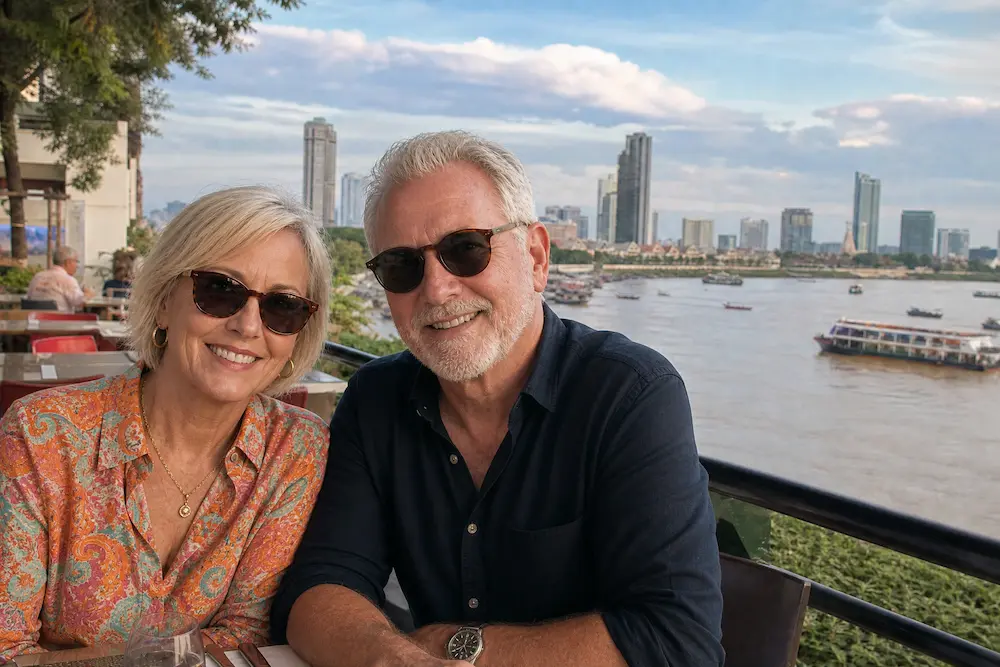
Phnom Penh, Siem Reap, Kampot, Kep, the coast and Battambang each suit a different kind of retirement.
Compare Cambodia locations| Destination | Best For | Relative Cost | Healthcare Access |
|---|---|---|---|
| Phnom Penh | Urban, best healthcare, largest expat community | Mid (Cambodia scale) | Best in Cambodia |
| Siem Reap | Angkor, cultural depth, community-oriented | Low-mid | Basic clinics only |
| Kampot | Riverside, most popular provincial expat town | Lowest | Basic only (PP 3 hrs) |
| Kep | Quiet beach, crab market, 25km from Kampot | Lowest | Basic only |
| Sihanoukville | Gulf coast, offshore islands, in recovery | Low-mid | Limited (PP 2 hrs) |
| Battambang | Authentic city, arts scene, off the trail | Lowest | Very limited (PP 5-6 hrs) |
Phnom Penh is Cambodia's capital and most developed city. It sits at the confluence of the Mekong, Tonle Sap, and Bassac rivers with a riverside promenade, French colonial architecture, a growing arts and restaurant scene, and the country's strongest private healthcare network. The BKK1 district is the established expat heartland with the most developed amenities. The city is smaller and more navigable than most South-East Asian capitals, and the international community is well-established across multiple nationalities.
Siem Reap is the gateway to Angkor Wat and the broader Angkor Archaeological Park. Living here gives you a relationship with this extraordinary heritage that is genuinely different from visiting as a tourist. The city has a distinctive arts scene anchored by Phare Ponleu Selpak, a warm and community-oriented expat population, good food, and a pace of life that is slower and greener than Phnom Penh. The city is in measured recovery from the near-complete collapse of international tourism during COVID-19, with the expat community rebuilding steadily.
Kampot is the most beloved provincial town in Cambodia's expat community. A small riverside town on the Kampot River, approximately 4 kilometres from the Gulf of Thailand coast, it has French colonial architecture along the waterfront, exceptional fresh seafood, and Cambodia's most celebrated produce in Kampot pepper, considered one of the world's finest spice products. The expat community here is long-term, deeply settled, and unusually engaged with local life. Kep, Cambodia's former French resort town famous for its crab market, sits just 25 kilometres away along the coast road and is a regular day trip for Kampot residents.
Kep sits 25 kilometres east of Kampot along the Gulf of Thailand coast, and the two towns are genuinely linked in how most people who live in either experience them. Kep was Cambodia's fashionable French colonial resort before the Khmer Rouge era, and the ruins of the villas from that period still dot the hillsides, giving the town a distinctive and quietly moving beauty. The Kep crab market, where fresh crab is pulled from the water and cooked immediately at waterside restaurants, is one of Cambodia's most celebrated food experiences. Most Kep residents also use Kampot regularly for services, socialising, and practicalities.
Sihanoukville requires an honest account. Before 2016 it was Cambodia's most popular beach town with a small Western expat community and good offshore island access to Koh Rong and Koh Rong Sanloem. Between 2016 and 2019, a wave of Chinese online gambling investment transformed it beyond recognition. When Cambodia banned online gambling in August 2019, the investors largely departed, leaving over 1,100 unfinished or abandoned buildings and a devastated local economy. The original Western expat community had already largely relocated, many to Kampot. As of 2026, the town is in genuine but slow recovery. The Cambodian government is pursuing a licensed casino-resort development model, the new expressway has reduced the Phnom Penh journey to approximately 2 hours, and a small number of Western expats have returned. Koh Rong Sanloem in particular retained more of its original character than the mainland town and remains genuinely beautiful.
Battambang is Cambodia's second largest city and one of its most characterful. It has French colonial architecture along the riverfront, a remarkable arts legacy in Phare Ponleu Selpak, a thriving local food scene, and beautiful surrounding countryside of rice paddies and Khmer temples. The foreign resident community is small. Living in Battambang is one of the most genuinely immersed Cambodian daily-life experiences of any destination in this guide, and for the right person, it is extraordinary.
The information on this page reflects our best understanding of the rules, costs, and conditions applicable to foreign retirees in Cambodia as of June 2026. Cambodian immigration law, visa requirements, property rules, tax regulations, healthcare conditions, and general living costs change regularly and sometimes without formal advance notice. The informal income thresholds applied by immigration officers to ER retirement visa extensions are administrative practice rather than written law and may change without legislative announcement. Cambodia's Capital Gains Tax, introduced in January 2026, is new and subject to interpretation; confirm the current position with a qualified Cambodian tax adviser before any property transaction. Information about Sihanoukville reflects conditions as of early 2026; this is an active recovery situation and conditions change regularly. Any description of Sihanoukville from before 2022 should not be relied upon for current conditions. Cost-of-living figures are based on Numbeo city comparison data and verified expat information for 2026 and are approximate; individual outcomes vary based on lifestyle, specific location, and personal circumstances. Nothing on this page constitutes legal, financial, immigration, tax, or medical advice. Healthcare in Cambodia, particularly outside Phnom Penh, is significantly more limited than in most neighbouring countries; obtain current, specific medical advice from a qualified professional regarding your personal health situation before making any location decision. We strongly recommend that you independently verify all information relevant to your specific situation, consult a licensed immigration professional for visa matters, and engage a qualified Cambodian property lawyer before any property transaction. RetireToAsia.com accepts no liability for decisions made in reliance on information contained on this page.