
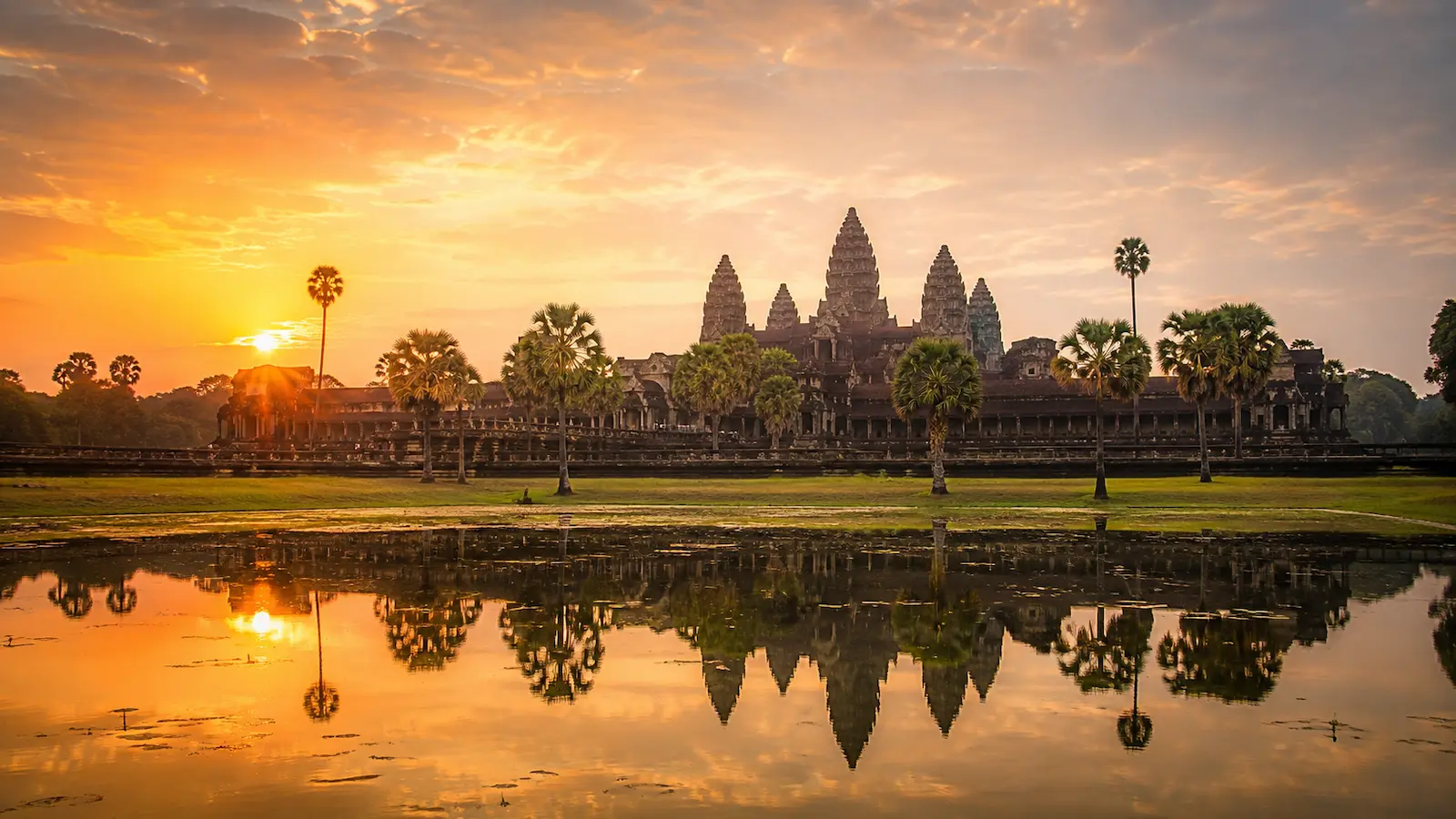
If you're weighing up retiring to Siem Reap Cambodia, here's what daily life actually looks like on the ground. Siem Reap is best known as the gateway to Angkor Wat, but over the past decade it has quietly become one of South East Asia's most affordable inland options for retirees, digital nomads and long-term travellers. This first-hand look covers costs, lifestyle and community.
I'd never been to Cambodia before flying into Siem Reap. I've travelled around SE Asia extensively, so I figured it would feel fairly familiar, and in a lot of ways it did. Like any well-established tourist town, it has the infrastructure to match: cafes, restaurants, bars, bakeries, supermarkets and no shortage of accommodation. But every place has its own quirks, and Siem Reap is no exception.
I'm usually a beach person, so it took me a few days to warm to the place. It has no beach, so I wouldn't personally settle here for a full year, but I could easily see myself spending a few months. It's a slower pace than the bigger tourist centres, it's genuinely cheap, and it has everything you need bar a coastline, including a solid international airport.
And it's a cliché to say it, but the people really are the standout. On my first week here, walking out of my hotel as it started to rain, the young woman on reception ran after me to hand over her own umbrella. That kind of small kindness is completely normal here. It's refreshing, and it makes settling in easy.
Living in Siem Reap
Siem Reap's tourism has always centred on Angkor Wat, but the city itself has become a genuine alternative to Asia's larger, busier hubs. It's relaxed, affordable, and has a welcoming community that makes it appealing compared with other inland or larger cities in the region.
I've always liked these smaller inland cities with a strong tourism base. As an expat you get the option of living away from the tourist bustle while still benefiting from the infrastructure that tourism brings, so you never feel cut off from the world. If you know Chiang Mai in Thailand, Siem Reap has a similar feel.
Lifestyle
If a slow-paced community suits you, Siem Reap delivers. It's a small city, roughly 15 to 20 minutes to cross fully by tuk-tuk, and the compact inner-city area takes only 5 to 10 minutes to get around. Tuk-tuks are everywhere and typically cost around US$1 a ride.
Traffic is light and the local patience is something else entirely. I watched a driver stop mid-traffic, hop out to grab a case of beer from a shop, load it into the boot and drive off again without a single horn blast from the cars banked up behind him. Not even a look. It's the kind of pace that could double as anger management therapy.
The central town still carries its French Indochine character: old colonial-era buildings and wider streets, interspersed with traditional Cambodian architecture. It makes the central area genuinely pleasant to walk around.
Beyond that, you'll find supermarkets, fitness centres, cafes, restaurants, healthcare clinics and dental services. It's not the place for a major medical event (more on that below), but for everyday needs, Siem Reap has you covered.
- Low cost of living
- Relaxed pace of life
- A genuinely community-friendly feel
- A strong spread of cafes, bars and restaurants (Pub Street is worth a look)
- A growing, welcoming expat community
- Light traffic and flat terrain, easy to get around
- Generally very safe
- An international airport close by
The city has a growing international community and plenty of opportunities to meet people while still experiencing authentic Cambodian culture. My tip: look at apartment blocks that cater to expats if you want an easy way to meet people early on, or find a bar with regular expat events and simply turn up. There are sports clubs, volunteering opportunities and social events running through the expat community year-round.
Friendly Atmosphere
I've already touched on how friendly people are here, but it's something you need to experience to really believe. In a week here, I haven't heard a raised voice or seen a bad gesture from anyone. Everyone is calm, almost as if the whole town is on the same wavelength. Tourism is a major part of the local economy, so many residents work in the sector and are used to interacting with foreigners, and they're genuinely warm about it.
English is widely spoken. The local accent takes a little more getting used to than, say, Thai, but you'll get by comfortably, and it only gets easier the longer you stay.
Cost of Living
This is where Siem Reap really stands out. Whether you're on a tight budget or want to stretch further than you could elsewhere, cost of living is one of the city's biggest drawcards.
A friend of mine, English, has lived here for years. His one-bedroom condo in a gated community, centrally located, with a pool, security and two free laundry services a week, runs him around US$400 a month. Want a step up to a more comfortable lifestyle? Budget closer to US$1,500 a month. Living well, closer to US$2,000.
| Expense | Typical Monthly Cost (USD) |
|---|---|
| Modern apartment | $300–$600 |
| House or villa | $600–$1,400 |
| Utilities | $40–$120 |
| High-speed internet | $15–$30 |
| Local restaurant meal (with a drink) | $2–$6 |
| Western-style meal | $8–$20 |
| Air-conditioned gym membership | $20–$50 |
| Coffee | $2–$4 |
Domestic help and laundry services are inexpensive too, so a genuinely comfortable expat lifestyle is well within reach here.
Siem Reap won't give you a beach, but it might just give you back your budget, your patience and a genuine sense of community.
Getting Around
Getting around is simple and cheap. Tuk-tuks will take you almost anywhere for around US$1. Walking is easy too, though tuk-tuks come in handy during the rainy season. Bicycles are popular since the terrain is flat, and scooters and ride-share apps are also widely used. With lighter traffic than most SE Asian cities, none of these options feel intimidating.
Thinking about Cambodia more broadly? You can also read our guide to retiring to Cambodia, including visa options.
Curious how your own budget would stretch in a place like Siem Reap? Run the numbers with R2A's free calculator.
Try the Retirement Cost of Living CalculatorWhat Are the Challenges?
Healthcare is the biggest one to weigh up. Siem Reap is well set up for everyday needs, with plenty of clinics, dentists, pharmacies and local hospitals. But for anything serious, you'll likely need to travel to Phnom Penh, or in more critical cases, a private hospital in Bangkok. This is exactly the kind of gap that International Private Health Insurance with medivac cover is designed for, and it's worth having in place before you need it, not after.
It also gets hot. I'm here in mid-July, and it's sitting around 32 degrees with a "feels like" of 38 most days, right at the start of the rainy season. Hot, humid, lush and green, but not a place for anyone who doesn't like to sweat a little.
Shopping is modest too. If you're used to big-box stores, Siem Reap tops out at small to mid-size, though I've personally found that more than enough. And while there's live music and plenty of bars showing sport from around the world, the nightlife scene isn't as extensive as somewhere like Thailand.
Is Siem Reap Right for Your Retirement?
Siem Reap genuinely surprised me. I came to meet a friend, half-expecting to be bored within a few days, but instead found one of the more compelling inland retirement, or longer-term living, options in SE Asia. Fantastic affordability, a strong sense of community, and a relaxed pace of life, all wrapped up with modern conveniences and a rich cultural backdrop.
There are enough fellow expats that you're unlikely to feel isolated, and because it's a well-established tourism town, the infrastructure is there to keep you busy. It's not the place for anyone managing major medical needs, and it won't ever have a beach, but if neither of those rule it out for you, it's well worth a look. Consider a trial stay of a few months first before making it permanent.
Frequently Asked Questions
How much does it cost to live in Siem Reap?
A comfortable monthly budget starts from around US$1,000, covering rent, utilities, food and everyday entertainment, with more upmarket living achievable from US$1,500 to US$2,000. Costs shift over time, so treat these as a starting guide rather than fixed figures.
Is healthcare in Siem Reap good enough for retirees?
Local clinics, dentists and pharmacies handle everyday needs well. For anything serious, you'll generally need to travel to Phnom Penh or Bangkok, which makes International Private Health Insurance with medivac cover worth having in place.
Is Siem Reap only for tourists, or is it realistic for retirees too?
Both. Its tourism-driven infrastructure is exactly what makes it liveable for retirees and long-term expats, with a growing international community, cafes, restaurants and healthcare on hand alongside authentic Cambodian culture.
Does Siem Reap have a beach or coastal access?
No, Siem Reap is inland. If a beach lifestyle is a priority, it's worth comparing against Cambodia's coastal towns or other SE Asia destinations.
Retire to Asia helps Australians weigh up destinations like Siem Reap alongside Thailand, Malaysia, Indonesia, the Philippines, Cambodia and Vietnam, from cost of living and visas through to healthcare planning. Run your own numbers with the Retirement Cost of Living Calculator, or get in touch with the R2A team to talk through your options.
This article is general information only and does not take into account your personal circumstances. It is not financial, legal, tax, or migration advice. Visa, superannuation, pension, tax, and healthcare rules vary by country and change over time. Speak with a licensed financial adviser, registered migration agent, or the relevant embassy before making retirement decisions.


